The Hand That Heals: What Neurotherapy (LMNT) Is
Neurotherapy (LMNT) is a medicine-free therapy. It uses pressure from the sole of the foot or the palm, at fixed places on the body, to improve the flow of blood and lymph to the inner organs and glands, so that the body can correct the root of a problem itself.
Overview
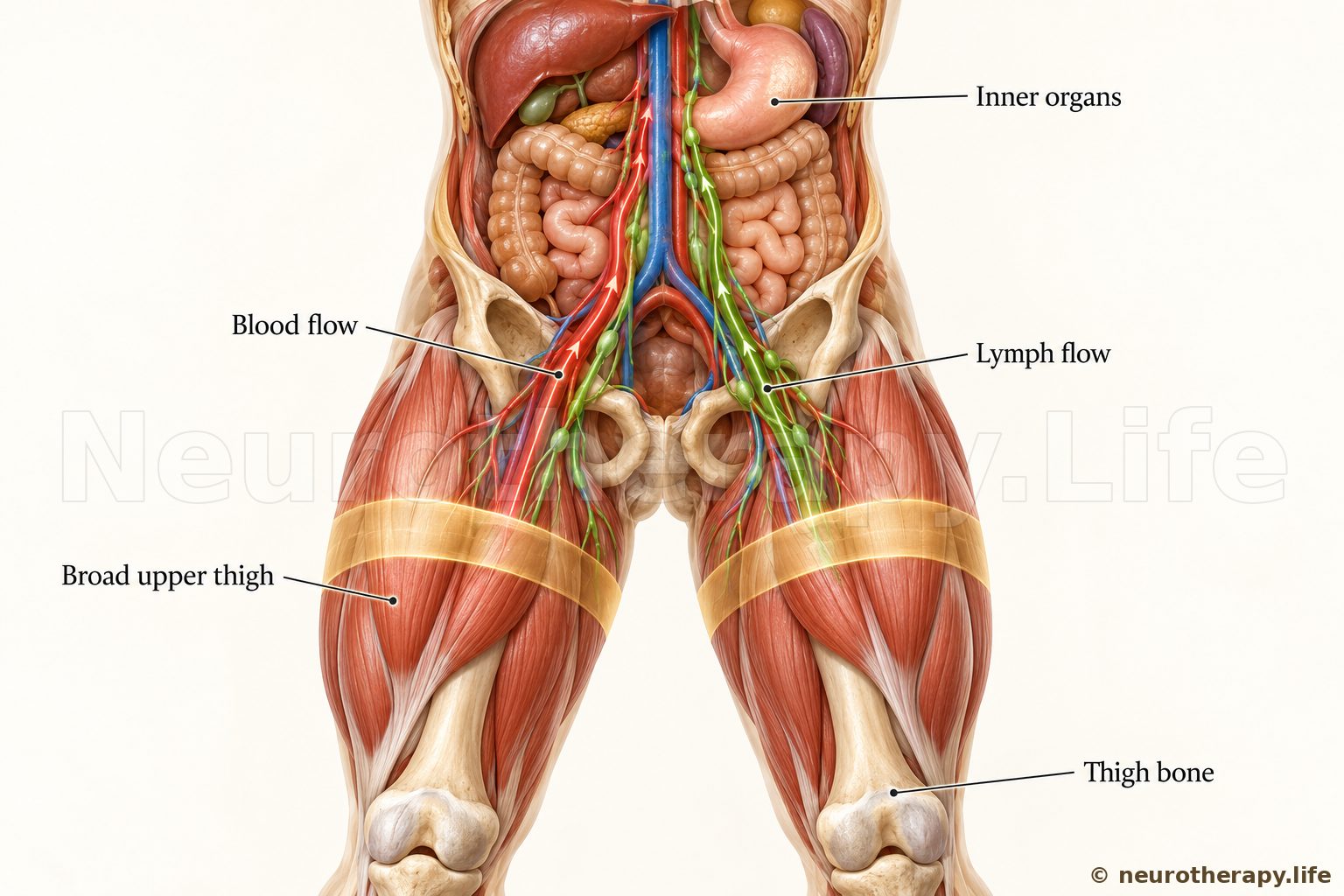
Neurotherapy (LMNT) is a medicine-free therapy. It uses pressure from the sole of the foot or the palm, at fixed places on the body, to improve the flow of blood and lymph to the inner organs and glands, so that the body can correct the root of a problem itself.
A stomach ache that started it all
An eleven-year-old boy in Amritsar had a stomach ache that lasted for months. His family tried every doctor they could find, and nothing helped. Then they met an old man who asked few questions. He made the boy lie face down and moved his hands and legs in a particular way. This was the old Punjabi folk practice of setting the navel. The pain went almost at once and never came back.
Notice one thing: nothing was done to the painful stomach itself. The help came through the arms and legs. That boy was Dr. Lajpatrai Mehra, whom students call Guruji. He spent the next seventy years working out why it worked. His mother became his first patient. He was too small to press hard with his hands, so he used his feet while taking his weight on his arms. That is why this therapy is still given with the sole of the foot today.
The whole therapy in one sentence
Neurotherapy (LMNT) is a medicine-free system of treatment. It increases the flow of blood and lymph in the inner organs and glands. Its main method is pressure, given with the soles of the feet or the palms, at particular places on the body, at a fixed time, angle and order. As the organs get their supply back, they start working smoothly again, and the root cause of the trouble is corrected. No medicine and no instrument is used.
In a patient's words: some organ inside you is not getting the blood it needs. An organ short of blood works badly and does not make its chemicals properly. We press certain places so that the blood goes back where it belongs. Then the organ repairs itself. We repair nothing; we only give back what it was short of.
- Medicine-free: nothing is swallowed, injected or rubbed on, so it costs little and can be taught to a family member.
- Blood and lymph: blood (the red fluid pumped by the heart) brings in what an organ needs; lymph (the clear fluid that drains the tissues) carries away what it must get rid of.
- Organs and glands, not the muscle you touch: the muscle is the door, the organ is the room.
- Several methods: pressure is the chief one, alongside light rubbing (ghisai), stretching, positioning and breathing.
Why an organ stops working
The body is a chemical factory. It makes almost everything it needs to stay well. Illness comes when the factory's work is disturbed, and the causes are ordinary: no control over what we eat and how we live, sitting badly, polluted air, worry, overwork, poor nourishment, fear and anger.
Guruji's key observation is simple. When the blood supply to any area of the body is interrupted, it shows as pain or numbness in that area. Read backwards, it is even more useful: when the pain goes, the supply has come back. You have felt this yourself. Sit slouched for two hours and an ache begins; shift your position and it goes.
The body holds a fixed amount of blood, shared out between all the organs. So if one area is short, another has extra. A method that moves some blood from where there is extra to where there is a shortage should help. That is the engine of the therapy. Everything else is the map of where to work.
The treatment follows the organ, not the disease name
A disease name is a handy label for a group of symptoms. It is not a thing inside the patient. Imagine one man whose food is not digesting well. On Monday he has a headache, on Wednesday gas, on Friday loose motions, next week heartburn. Four counters would give him four names and four tablets. But it is one fault in one place, showing four faces. Correct the digestion and all four settle, along with others that had not yet appeared.
So the treatment is aimed at bringing the glands and organs back to normal work, not at a disease name. Three working rules follow from this.
- The same disease may need a different treatment in two different people.
- The same person may need a different treatment on different days, because the body changes as it improves.
- People with different diseases may need the same treatment, if they share the same pain points.
- Even where people live and what they eat matter: a knee treatment that suits a patient in Ludhiana may not suit one in Chennai, because the food is different.
The root, not just the warning
Small ailments like fever, cold, cough, indigestion and constipation come as a warning. If only the symptom is silenced, the warning goes quiet while a bigger problem keeps growing. Think of a damp patch on a ceiling. You can paint over it, but the real fault is a broken tile on the roof, and the patch was the only way to find it. Relief is a mercy and is often urgent. It is simply not the same as correction.
When the root is corrected, patients often report changes they never came for. A woman comes about her knees and, weeks later, mentions that her hair has stopped falling and she no longer needs her antacid. Long before that, most people notice better hunger, better sleep, more energy and a lighter body.
Is this not just acupressure?
No. Guruji was clear that Neurotherapy (LMNT) has no relation to acupressure or to any other therapy, though it openly owns one folk root: navel setting. The difference is in what is being worked on. Neurotherapy (LMNT) works on the body's blood and lymph circulation and the nervous system, based on physiology (the science of how the body works). Acupressure works on energy channels called meridians.
Three things belong to Neurotherapy (LMNT) alone: its own diagnosis points around the navel, its own fixed timing of each press, and the order in which organs are stimulated. Pressure is also spread over a broad area with the soft middle of the sole, not dug into one spot, so it does not hurt — even a small child feels no distress. Massage relaxes muscle and skin but has no point map and no fixed order. The exact method is taught hands-on in the course.
Who can receive it, and what it is used for
Anyone from a one-day-old baby to a person of a hundred can take this treatment. Very small children and old or weak people are treated with the hands, and with light treatment. Adults of bigger build are treated with the feet. The therapist stands between two chairs and carries his weight on his arms, so only as much weight as the treatment needs reaches the patient.
Patients have reported relief across a wide range of common complaints: digestion, joints and back, glands and hormones, the nerves, and problems of women and children. Measured values such as blood pressure, blood sugar, cholesterol, uric acid and thyroid levels have been reported to improve. Parents of children with conditions like autism, ADHD, Down syndrome and cerebral palsy report real improvement in quality of life. This is not a promise of cure; it means the door is not shut. Neurotherapy (LMNT) works alongside medical care, never instead of it.
A session lasts about half an hour, with short gaps built in. Come with a fairly empty stomach, breathe slowly through the nose, and stay relaxed. If anything hurts, say so at once, and the therapist will change the angle; the treatment loses nothing by it.
Key points
- Neurotherapy (LMNT) is medicine-free: it improves blood and lymph flow to the inner organs and glands, mainly by pressure with the sole or palm.
- Pain or numbness in an area reports a shortage of blood supply; when the pain goes, the supply has returned.
- Treatment follows the organ that is under-working, not the name of the disease.
- The aim is to correct the root, not just silence the symptom.
- It is not acupressure: it has its own diagnosis points, its own timing and its own order, and pressure is spread wide so it does not hurt.
- Anyone from a newborn to a hundred-year-old can receive it — children and the frail with the hands and light treatment.
- Medicines are never stopped by the therapist; it works alongside your doctor's care.
Topics in this guide
Go deeper
The Man Who Would Not Accept 'Incurable': The Life of Dr. Lajpatrai Mehra
The life of the man who built the therapy
The Body's Own Pharmacy: How the Body Makes and Balances Its Chemicals
How the body makes and balances its own chemicals
The Timed Press: Why Time, Angle and Order Are Fixed
Why time, angle and order are fixed in every press
The Navel Speaks First: The Map of the Pain Points
Why examination begins at the navel
Before You Touch Anyone: Room, Conduct and Consent
What is checked before any treatment
When the Hand Must Stop: Blocked Points and Safety in Neurotherapy (LMNT)
When the hand must stop
Treating Women: Periods, Pregnancy and Care
Treating women, and the rules around periods and pregnancy
Digestive system
The digestive system — where most work begins
Lymph and immunity
Lymph: the second fluid the therapy moves
Safety: when it is held back
- Never stop or change your medicines because you are taking Neurotherapy (LMNT). When the complaint has fully gone, ask your own doctor whether the dose should change — that decision is the doctor's. How to tell a patient to see a doctor
- If the pressure hurts, say so at once. Pain kept silent may remain after treatment or leave weakness; the therapist will change the angle without reducing the effect.
- Small children, the elderly and the frail get light treatment, given with the hands. The Child, the Elder and the Frail: Neurotherapy (LMNT) for Delicate Bodies
- During the menstrual period, women do not take treatment for other problems; they may come only for period problems such as very heavy, non-stop or very scanty bleeding, pain or clots. Period problems (irregular, heavy or painful)
- In pregnancy, no pills of any kind should be taken without the doctor — their effect falls on the mother's liver and kidneys and reaches the child. Pregnancy care
- Some findings must go to a doctor the same day. The therapist also checks the blocked points for each disease before any treatment. When the Hand Must Stop: Blocked Points and Safety in Neurotherapy (LMNT)
Guruji says
“I must do something!”
“I am yet to understand the human body. My knowledge is hardly the tip of the iceberg. Neurotherapy (LMNT) is just in its infancy. There is a long way to go.”
Common questions
Why do you press my thigh when my problem is my stomach?
Because this therapy works on the blood supply, and the limbs are linked to regions of the trunk. The muscle you touch is the door; the organ is the room. It is like tightening a nut at one end of a machine to stop a rattle at the other end.
Will it hurt? You press with your foot.
No. The pressure is spread over a broad area with the soft middle of the sole, and the therapist's weight rests on two chairs, so only as much comes down as is needed. If anything is uncomfortable, say so and the angle is changed.
Should I stop my tablets?
No. No medicine is used here and nobody is asked to stop theirs. Keep taking what your doctor prescribed. If your complaint goes completely, ask your doctor whether you still need the same amount.
My tests are all normal. So why do I feel unwell?
A normal test means nothing that test measures is wrong — good news worth having. But much of what troubles people is organs working slowly rather than organs being damaged, and a blood report is not built to show that. The therapist reads the pain points with the hands.
Can you cure my child's cerebral palsy?
No honest therapist will promise a cure, so be careful of anyone who does. What can be said is that many children have done well and parents report real improvement in daily life. It is given alongside the child's medical care.
Watch

An overview of LMNT's diagnostic pain points — the places around the navel that the therapist presses to read the body before choosing a treatment.

A podcast conversation on indigestion: its common signs, causes such as rushed meals, stress and some medicines, and how Neurotherapy (LMNT) looks at digestion through the body's acid–alkali balance. No points are demonstrated.
Test yourself
Research
- Strong evidence
A review of how lymph moves. Lymph vessels squeeze in segments with one-way valves, and outside forces — muscle use, breathing and body movement — push it along too. Fast walking was found to raise lymph flow at the ankle many times over the flow during sleep.
Moore JE Jr, Bertram CD. Lymphatic System Flows. Annual Review of Fluid Mechanics. 2018;50:459–482.
Explore more
Organs
Body systems
Diseases
Points
Formulas
Topics
Read more
This page explains what a Neurotherapy (LMNT) treatment is for; it is not a self-treatment guide and does not diagnose. Neurotherapy (LMNT) works alongside your medical care — keep taking the medicines your doctor prescribed.