How to tell a patient to see a doctor
Not everyone who comes can be treated by the therapist alone. When a patient needs a doctor, it is said early, clearly and kindly, with the day named and a short note to carry, and the patient is welcomed back afterwards.
Overview
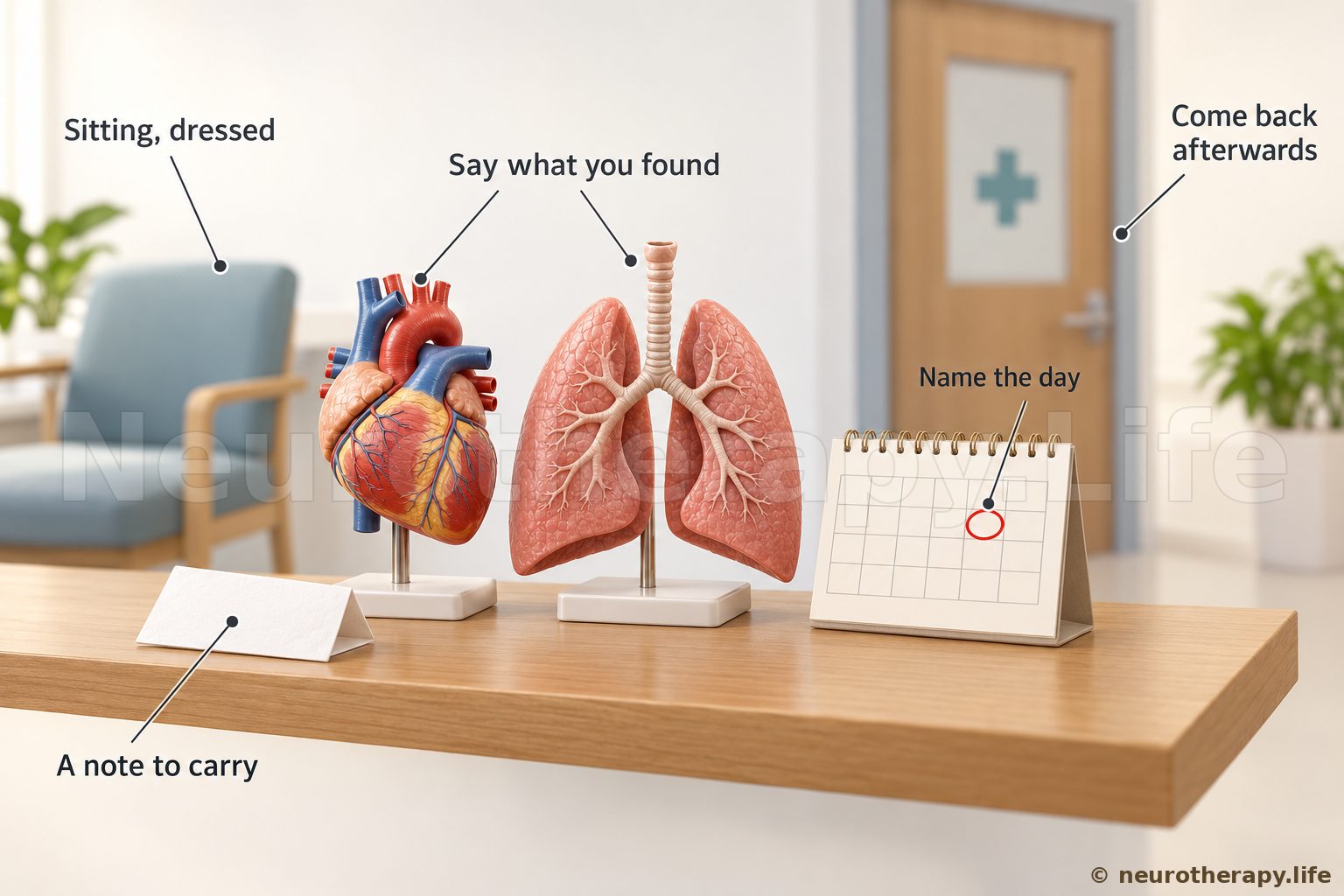
Say it early, sitting, with the patient dressed. Nobody should hear this news lying on a mat with clothing arranged for treatment. If the therapist knows during the history, it is said during the history.
Say what you found, not what you fear. 'You have told me two things that I do not treat around' is clear. 'This could be something serious' tells the patient nothing and frightens them completely.
Name the timescale out loud. Patients hear 'see a doctor' as 'see a doctor sometime'. If it is today, say today, and say the hour if the finding needs it.
Give them something to carry: a short written note of what they told you, what you found, what you did not do, and the date. And do not send them away: 'This is not me sending you away. Come straight back when they have seen you, and we will go on.'
Neurotherapy (LMNT) uses no medicine of any kind. If a patient already takes medicine, the therapist never tells them to stop it; treatment goes on alongside. When the complaint has gone, the patient asks their own doctor whether the tablets are still needed in the same amount.
Key points
- Early, sitting, dressed.
- Say what you found, not what you fear.
- Name the day, and the hour if needed.
- Give a short written note to carry.
- Make clear they are welcome back.
Go deeper
When the Hand Must Stop: Blocked Points and Safety in Neurotherapy (LMNT)
When the hand must stop: the whole guide
Before You Touch Anyone: Room, Conduct and Consent
Before you touch anyone: the checks that come first
Taking a Patient's Story: The History That Cannot Mislead
Taking a history that does not mislead
The Record That Shows the Truth: The Patient Card in Neurotherapy (LMNT)
The record, and the note a patient can hand over
The Hand That Heals: What Neurotherapy (LMNT) Is
What Neurotherapy (LMNT) is, and how it works alongside medicine
Cancer care: Neurotherapy (LMNT) support
Cancer care, where the therapy only ever runs alongside
Read the full guide
This topic is part of: When the Hand Must Stop: Blocked Points and Safety in Neurotherapy (LMNT)
Safety: when it is held back
- When a patient needs a doctor today, do not soften it with 'let us do a little something today'. A referral that comes with a treatment attached is heard as reassurance, and the appointment gets put off.
- Never advise reducing or stopping any medicine without the opinion of the doctor who prescribed it.
This page explains what a Neurotherapy (LMNT) treatment is for; it is not a self-treatment guide and does not diagnose. Neurotherapy (LMNT) works alongside your medical care — keep taking the medicines your doctor prescribed.