Treating the root cause, not just the symptom
Neurotherapy (LMNT) aims to correct the cause behind a complaint, not only to quiet the warning sign. Small ailments are messages from the body, and when the root is set right, the complaints linked to it tend to ease together.
Overview
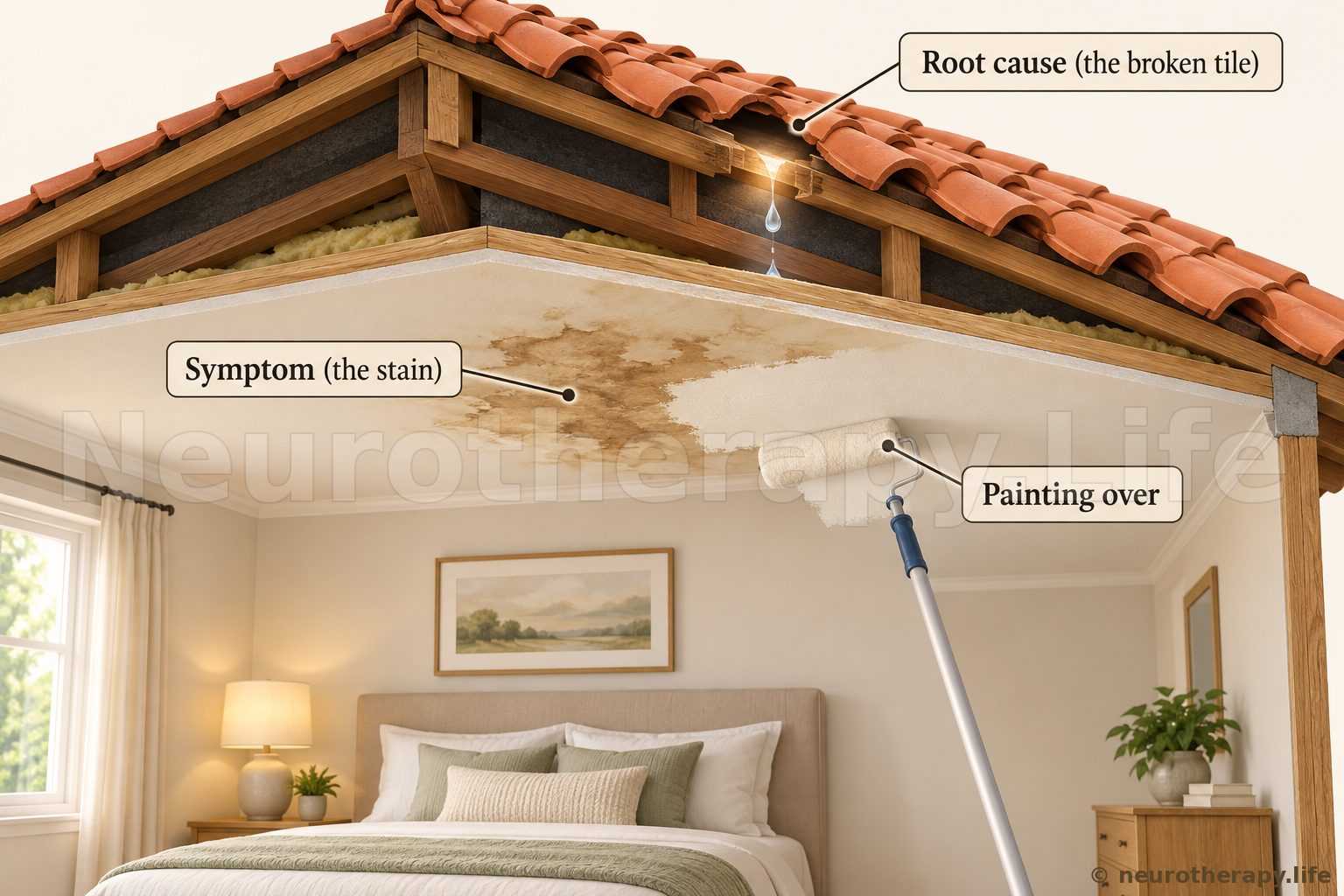
Neurotherapy (LMNT) does not aim at the symptom alone. Its aim is to improve the working of the glands and organs, so that the cause of the trouble is corrected and the chance of the next illness also falls.
Small ailments such as fever, cold, cough, indigestion, constipation or a stomach ache come as warnings. If only the symptom is pushed down, the warning goes quiet, but the deeper problem can keep growing without any signal.
Think of a damp patch on a bedroom ceiling. You can paint over it, and it looks fine for a fortnight. But everyone knows a tile is missing from the roof, and the patch was the only way you would have found out. Relief is a mercy and often urgent. It is simply not the same act as correction.
When the root is corrected, patients often notice changes they never mentioned. Someone who came for knee pain may report that her hair has stopped falling or that she no longer reaches for an antacid. These are not coincidences; they share one cause.
The first changes are usually small and early: better hunger, better sleep, more energy, less weakness and a lighter body. Lifestyle matters too. Wrong habits of food, sleep and exercise, and long-held tension, can bring symptoms back, so some people also need to change how they live.
Key points
- A symptom is a message from the body, not the problem itself.
- Silencing a warning is not the same as correcting its cause.
- When the root improves, linked complaints often ease together.
- Early signs of progress are simple: hunger, sleep, energy and lightness.
- Daily habits and tension decide whether the gain lasts.
Go deeper
The Hand That Heals: What Neurotherapy (LMNT) Is
What Neurotherapy (LMNT) is, in one clear sentence
The Body's Own Pharmacy: How the Body Makes and Balances Its Chemicals
How glands make the body's own chemicals
Glands and hormones
The glands and hormones the therapy aims to support
Digestive system
Why the work so often begins at the belly
Staying well (prevention)
Keeping well once the complaint has eased
Constipation
A small complaint that often points to a bigger story
Read the full guide
This topic is part of: The Hand That Heals: What Neurotherapy (LMNT) Is
Safety: when it is held back
- Neurotherapy (LMNT) works alongside your medical care. Do not stop or change any medicine on your own; ask the doctor who prescribed it.
This page explains what a Neurotherapy (LMNT) treatment is for; it is not a self-treatment guide and does not diagnose. Neurotherapy (LMNT) works alongside your medical care — keep taking the medicines your doctor prescribed.