The seated neck treatments: the chair, the gentle glide and the safety rules
The neck treatments of Neurotherapy (LMNT), from Medulla to Necklace, are given with the patient sitting on a firm chair. They share one way of working, a slow glide that never jerks the neck, and one set of safety rules.
Overview
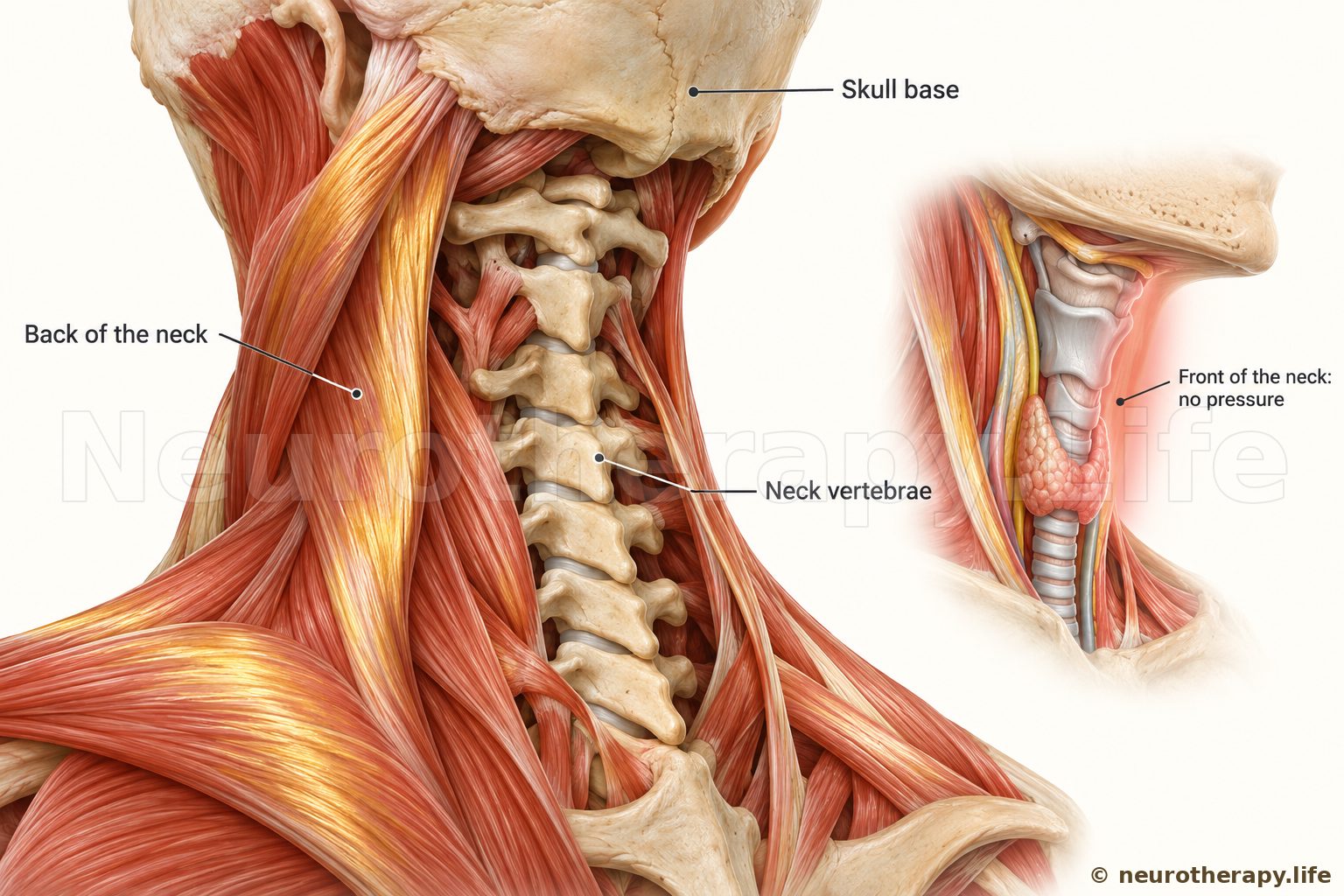
A whole group of Neurotherapy (LMNT) points is given with the patient seated: Medulla, Mesencephalon and Dorsal at the back of the neck, Raman and Mukha Dhauti, Endorphin, Subclavian, Neck Clockwise, Ptyalin, Necklace and Thoracic T1/T2. The patient sits well back on a firm, flat chair, feet flat on the floor, back supported and hands loose. If someone is very ill or very weak, the same treatments may be given lying down.
All of them share one way of working. The touch is a slow glide, never a thrust. The neck is not twisted, pulled or moved suddenly, and the hand that holds the head only steadies it. No pressure is ever given on the front of the neck, where the windpipe and the big blood vessels lie.
Medulla, Mesencephalon and Dorsal are one movement in three lanes: behind the ears and down the side of the neck, in the soft grooves beside the neck bones, and on the bones themselves. Medulla is written in named variants, and each variant has its own effect, so the one on the card must be given exactly as written.
After the neck, the seated work moves up onto the head and the face. What each point is used for, and when it is held back, is on each point's own page. The exact method is taught hands-on in the course.
Key points
- The seated group is given on a firm, flat chair, or lying down if the patient is very weak.
- Glide, never thrust: no twisting, pulling or sudden movement of the neck.
- Nothing presses on the front of the neck.
- Each Medulla variant is a separate treatment and is given exactly as written.
- Raman is given only after Liv° and Mu° have been checked.
Go deeper
Medulla, Mesencephalon and Dorsal: three treatments at the back of the neck
Medulla, Mesencephalon and Dorsal: the three lanes of the neck
Raman and Mukha Dhauti: a shoulder lift and a healing breath, chosen by the navel check
Raman and Mukha Dhauti, and the check that comes first
Neck Clockwise, Ptyalin and Necklace: seated treatments for the neck, jaw and base of the skull
Neck Clockwise, Ptyalin and Necklace
Thoracic T1/T2: the treatment area just below the base of the neck
Thoracic T1/T2 at the base of the neck
Medulla, the graded series
Why each Medulla variant is its own treatment
Cervical spondylosis
Neck pain from worn neck bones
Neck
What lies inside the neck
Seated Treatments I: The Back of the Head and the Neck
The full guide to the seated neck treatments
Read the full guide
This topic is part of: Seated Treatments I: The Back of the Head and the Neck
Safety: when it is held back
- No pressure is ever given on the front of the neck. Subclavian presses onto the collarbone, never deep into the hollow below it. Subclavian
- Raman lowers acid and raises alkali, so it is given only after checking Liv° and Mu°. Where Liv° is painful and Mu° is not, giving Raman without the check can increase the pain a great deal. Raman
- A lump in a salivary gland is never treated with Ptyalin; it goes to a doctor. Ptyalin
- In heart disorders, (10) Medulla is never given on both sides; only (10) Left Medulla is used. In cancer, (30) Medulla is never given. (10) Medulla
- The exact method is taught hands-on in the course, under a trained therapist. Please do not try it on yourself or others from this page.
Watch
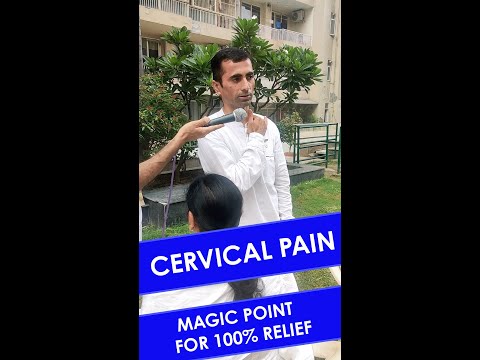
Shows a seated routine for neck pain: zig-zag fingertip massage from the base of the skull to the shoulder blades and down the arm, cross-rubbing, rounds of breathing out through the mouth, and a gentle grip massage at the back of the neck. It is shared for relief in cervical pain and tingling in the hands.

This video shows the right way to give (4) Medulla, Raman and the T1–T2 point for neck and shoulder pain and numbness.
This page explains what a Neurotherapy (LMNT) treatment is for; it is not a self-treatment guide and does not diagnose. Neurotherapy (LMNT) works alongside your medical care — keep taking the medicines your doctor prescribed.