Neck Clockwise, Ptyalin and Necklace: seated treatments for the neck, jaw and base of the skull
Three seated treatments work the side of the neck, the salivary glands of the face and jaw, and the ridge at the base of the skull. They relax muscle, increase saliva and ease pain through the whole body.
Overview
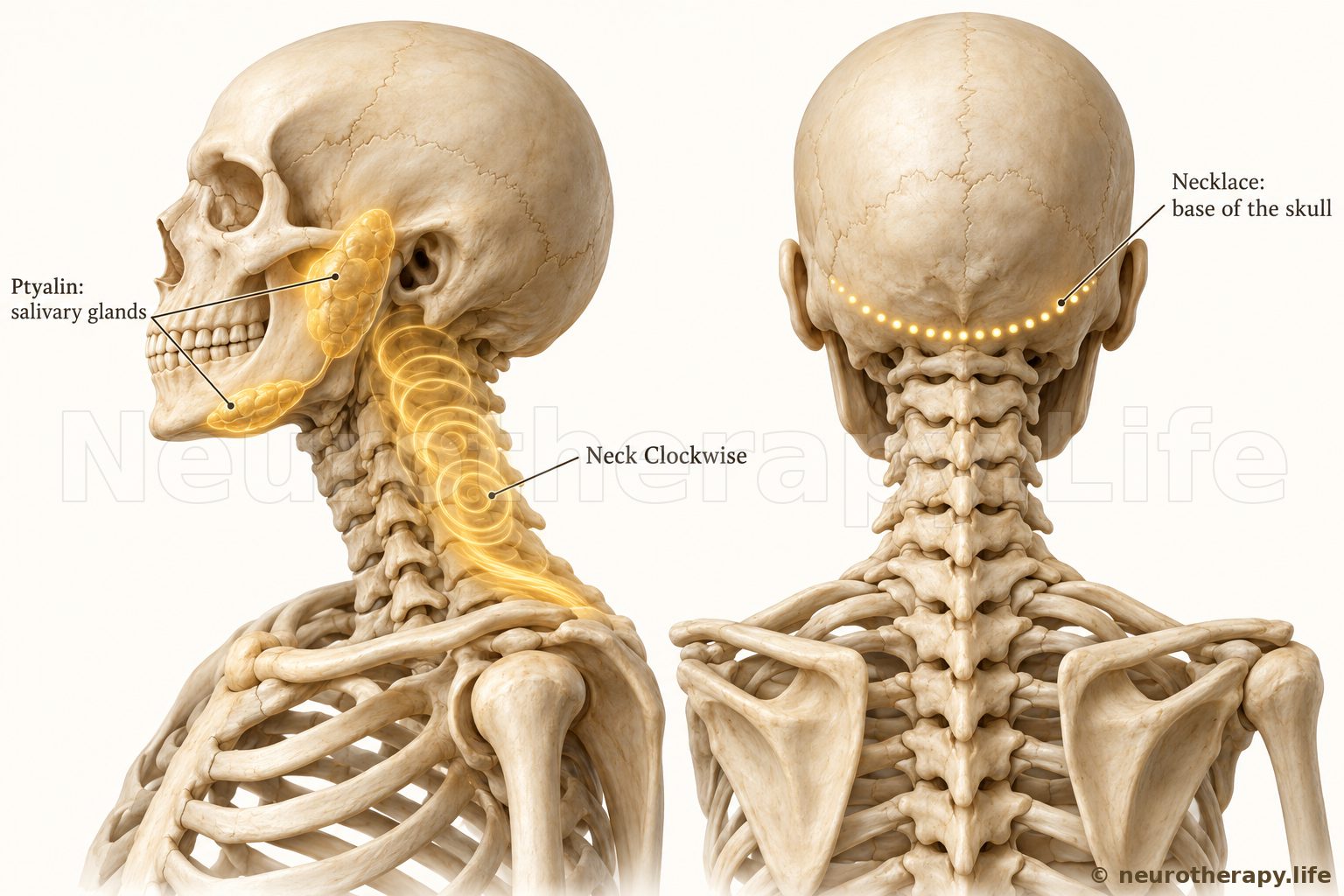
Neck Clockwise is given with the fingers gathered into a soft pad, circling clockwise on the muscles at the side of the neck, from below the ear down towards the shoulder, beginning on the left side. It works on the big strap muscle of the neck and the muscle that lifts the shoulder blade. The back border of that strap is a safe working line; its front border is never crossed.
Ptyalin is named after the enzyme in saliva that begins the digestion of starch. With light palms on the cheeks and under the jaw, it stimulates the three pairs of salivary glands, the parotid in front of the ear, and the sub-mandibular and sub-lingual under the jaw and tongue, and increases the flow of saliva.
Necklace is a string of close, light presses with the thumb along the ridge of bone at the back of the skull, from behind one ear across to the other, while the other hand steadies the head without pulling it. It relaxes the muscles just below the skull, so that messages between the brain and body pass freely, and the source says the pains of the whole body become much less.
Screening comes first. In one teaching case, a man came with his first-ever headache, which began suddenly while lifting, with a stiff neck and a drooping eyelid. Nothing was given at the neck; he was sent for a scan the same day, which found a tear in a neck artery.
Key points
- Neck Clockwise: soft circles on the side of the neck, left side first.
- Ptyalin: light palms over the salivary glands to increase saliva.
- Necklace: light presses along the base of the skull, ear to ear.
- The front of the neck is never worked.
- A sudden new headache is sent to a doctor before any neck work.
Go deeper
Neck Clockwise
Neck Clockwise in full
Ptyalin
Ptyalin, for the salivary glands
Necklace
Necklace, at the base of the skull
Saliva problems (dry mouth and drooling)
Saliva problems such as a dry mouth
Cervical spondylosis
Cervical spondylosis and neck pain
Neck
The neck
Medulla, Mesencephalon and Dorsal: three treatments at the back of the neck
Medulla, Mesencephalon and Dorsal
Seated Treatments I: The Back of the Head and the Neck
The seated points for the brain and neck
Read the full guide
This topic is part of: Seated Treatments I: The Back of the Head and the Neck
Safety: when it is held back
- Stop and refer for dizziness, disturbed vision, unsteadiness, slurred speech, light-headedness, nausea, or a headache unlike any the patient has had before. How to tell a patient to see a doctor
- The steadying hand never pulls, pushes or turns the head. No rotation, no traction, no leverage at the base of the skull.
- Never work over a swelling in a salivary gland. A lump in front of the ear or under the jaw that has been there for weeks is assessed, not massaged; a hot, painful, swollen gland with fever needs a doctor the same day. Saliva problems (dry mouth and drooling)
- The exact method is taught hands-on in the course, under a trained therapist. Please do not try it on yourself or others from this page.
Watch
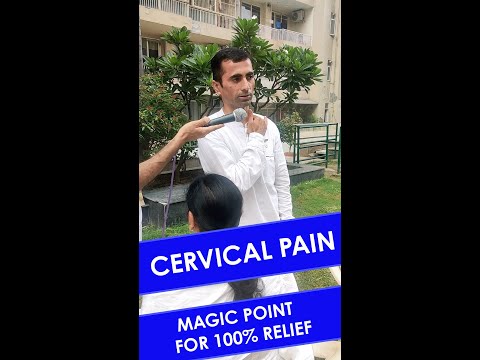
Shows a seated routine for neck pain: zig-zag fingertip massage from the base of the skull to the shoulder blades and down the arm, cross-rubbing, rounds of breathing out through the mouth, and a gentle grip massage at the back of the neck. It is shared for relief in cervical pain and tingling in the hands.
This page explains what a Neurotherapy (LMNT) treatment is for; it is not a self-treatment guide and does not diagnose. Neurotherapy (LMNT) works alongside your medical care — keep taking the medicines your doctor prescribed.