The arrow treatments along the spine, and Sudhakar
A family of back treatments works the same strip of the spine in different directions, and the direction decides what each one does. Sudhakar, named after the patient in whom it was found, works the muscles around every vertebra.
Overview
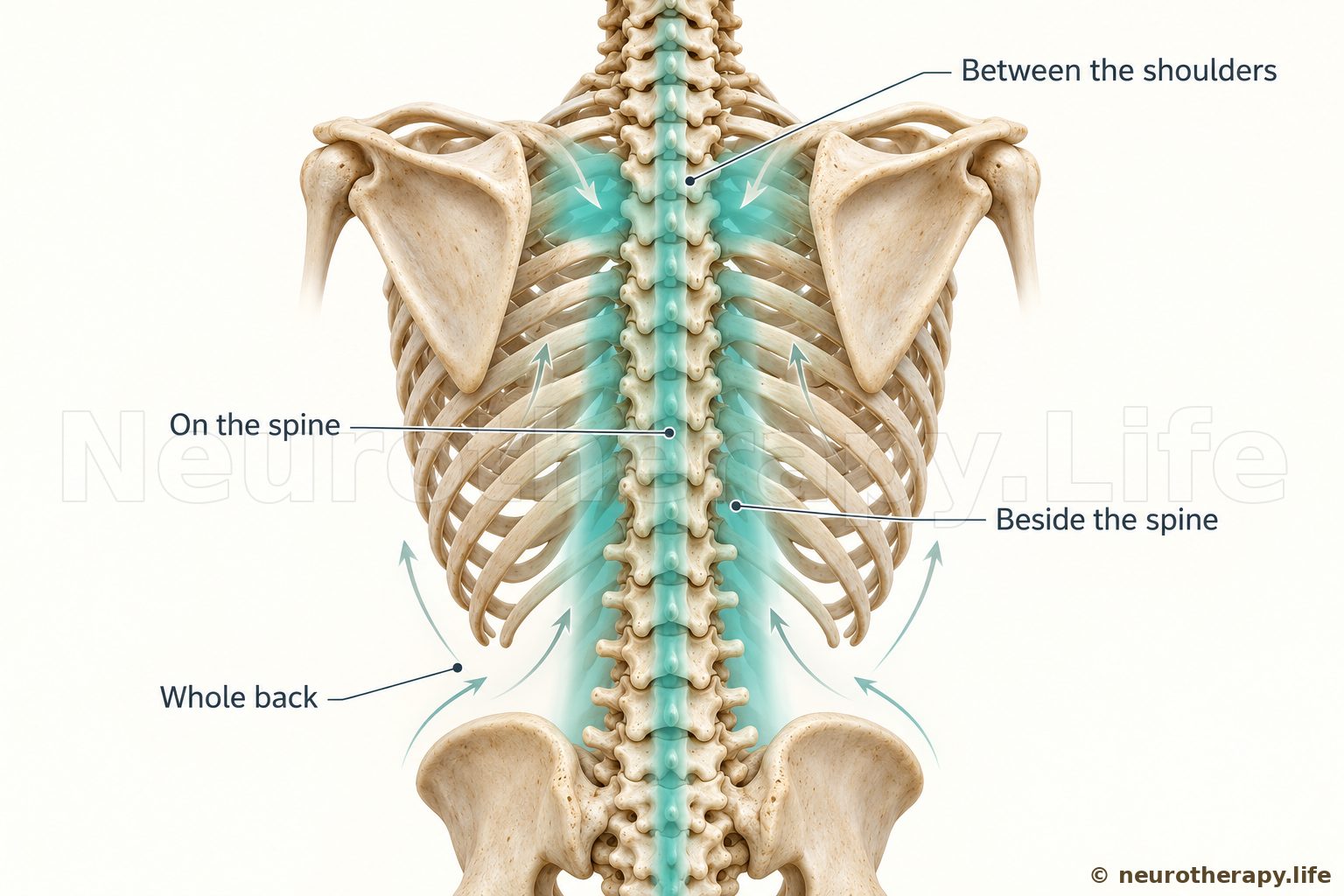
Several Neurotherapy (LMNT) treatments are given along the spine and are named for the arrows drawn on a treatment card. They cover the same ground but move in different directions, and the direction is part of the treatment. Most are given with the patient lying face down.
Back Arrow is given to increase blood circulation to the lungs and in breathing-related diseases. H Arrow, between the shoulders, stimulates the nerves of the upper back and is used for brain, breathing, ear and eye problems. On the Spine aims to bring vertebrae back to their place, and Beside the Spine stimulates the spinal nerves on both sides.
Round Arrow is given to regulate the flow of CSF, the clear fluid around the brain and spinal cord, and to stimulate the spinal nerves. It also eases pain at Mu°, and it is paired with Chest Only to keep the acid-alkali balance. Down Arrow is used for a very runny nose and in Ménière's disease, where fluid in the inner ear must be reduced.
Sudhakar is named after the patient in whom it was worked out. In it, the muscles around all the vertebrae of the back are moved and brought to their correct place, and it is described as helpful for the neck, the back and all pains. Its method is not written down anywhere; it is shown only hand to hand by a trained teacher.
The exact direction, pressure and method of each arrow treatment are taught hands-on in the Neurotherapy (LMNT) course.
Key points
- On the spine, the direction of the stroke decides what the treatment does.
- Back Arrow and H Arrow serve the lungs, breathing and the nerves of the upper back.
- Round Arrow works with Chest Only to keep acid and alkali in balance.
- Down Arrow has a written upper limit, because its effect can reach the fluid around the brain.
- Sudhakar works the muscles around every vertebra and is taught only in person.
Go deeper
Round Arrow
Round Arrow and the acid-alkali balance
Back Arrow
Back Arrow: blood supply to the lungs
Down Arrow
Down Arrow and its written limit
Organ Clearance
Organ Clearance: the treatment that covers the whole back
Three Arrows
Three Arrows: a shorthand on the card
Spine
The spine and the nerves that leave it
Low back pain
Low back pain
Face Down: Treatments Given on the Back and Spine
The guide to treatments given face down
Read the full guide
This topic is part of: Each Point in Use: What It Is For, and When It Is Held Back
Safety: when it is held back
- Down Arrow is never given beyond its written limit, because its effect can fall on the fluid around the brain (CSF). Down Arrow
- A patient lying face down must have proper pillow support under the chest, so the neck is not held twisted. Where pillows go during treatment, and where they never go
- Thin bones, a recent fracture or long use of steroid tablets mean no forceful pressure on the spine. Osteoporosis
- Neurotherapy (LMNT) works alongside your medical care. Do not stop or change any medicine on your own; ask the doctor who prescribed it.
Watch
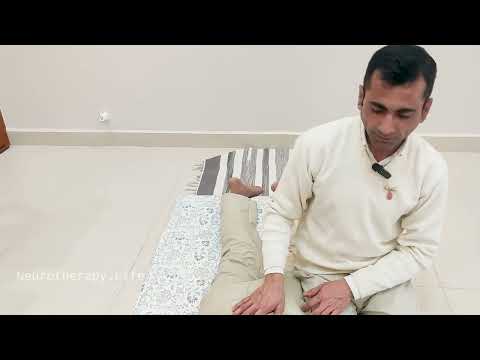
A short Hindi demonstration of Organ Clearance: the patient lies face down on two pillows, and the therapist's open hands work over the whole back in overlapping strokes — first up and down, then side to side — twice each, leaving no area out.
This page explains what a Neurotherapy (LMNT) treatment is for; it is not a self-treatment guide and does not diagnose. Neurotherapy (LMNT) works alongside your medical care — keep taking the medicines your doctor prescribed.