Medical reports that change a Neurotherapy (LMNT) plan
Some blood tests and scans change what a Neurotherapy (LMNT) therapist does: thyroid, haemoglobin, sugar, calcium and bone density, B12 and folic acid, kidney and liver values. Each report is asked one question: does it change the plan or not?
Overview
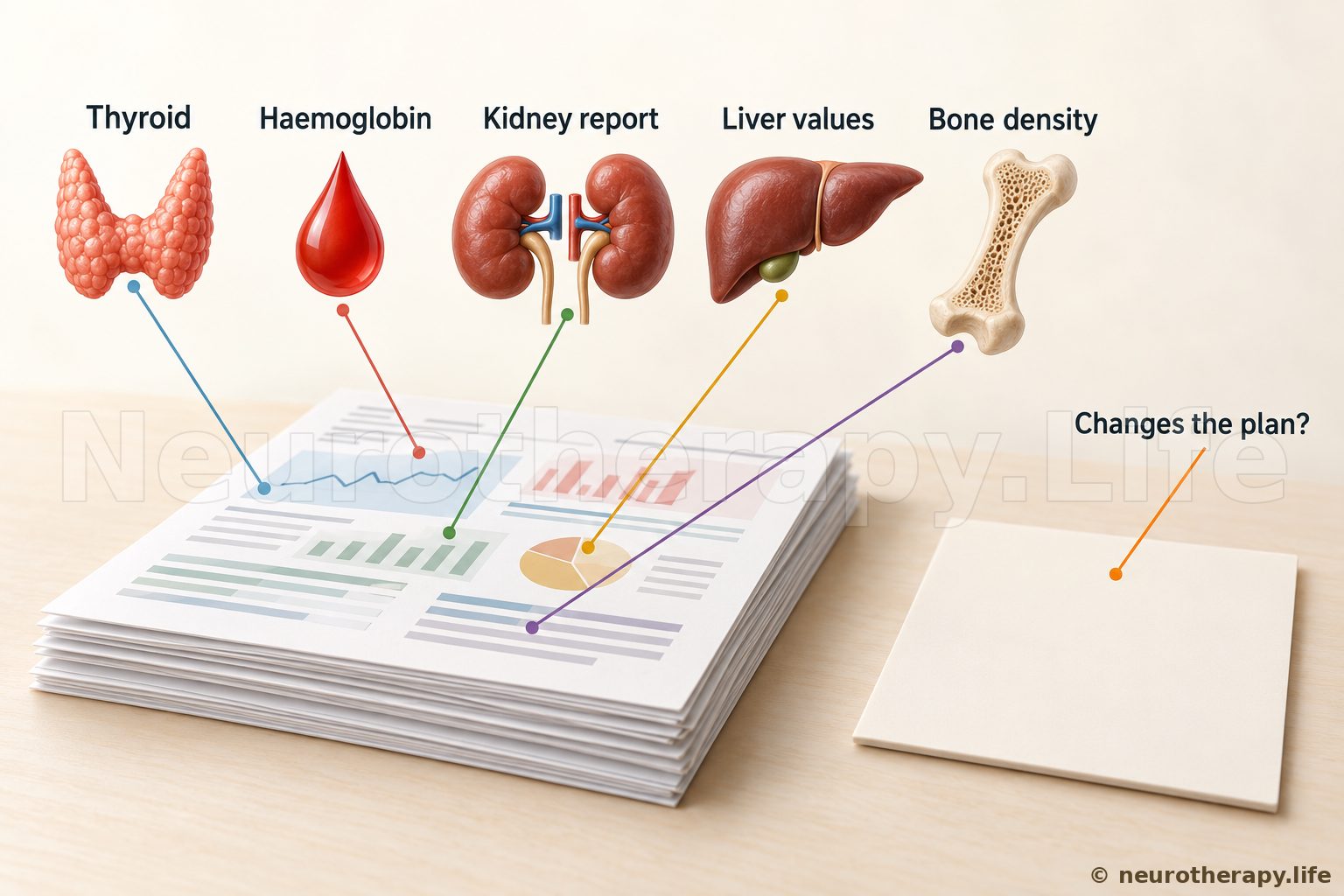
A Neurotherapy (LMNT) therapist reads every report a patient brings and says aloud whether it changes the plan or changes nothing. Most change nothing. A few change a great deal, usually by closing a point that should not be given.
The thyroid report matters because the thyroid sets the body’s pace; a slow thyroid also slows the bowel. A high TSH means the body is pushing a gland that is not answering. In this therapy, a thyroid report is often also a report about the stomach, because the raw material for thyroid hormone comes from digestion. Certain conditions on a report, such as a bony spur, bamboo spine, asthma or heart disease, change which thyroid points may be given.
A low haemoglobin explains giddiness and tiredness and prompts questions about blood loss. Blood sugar reports change how the feet are checked before any pressure. Calcium and bone density decide how gently a patient must be treated. B12 and folic acid are read as reports about absorption, not just about diet.
The kidney report is the one page most likely to make a therapist withhold a treatment. Raised creatinine or urea means the kidneys are not filtering well, and the kidney points are then not given. Liver values matter because the liver influences cholesterol and uric acid. A therapist never orders tests; if something would change the plan, the request goes through the patient’s own doctor.
Key points
- Each report gets one of two answers: changes the plan, or changes nothing.
- A thyroid report is often also a report about digestion.
- The kidney report is the page most likely to withhold a treatment.
- Osteoporosis, small children and the very weak are treated with the hand only.
- Missing tests are requested through the patient’s own doctor, as caution.
Go deeper
Reading the Reports: Which Tests Change the Treatment
Reading the reports: the full guide
When the report is normal but the pain is real
When the report is normal but the pain is real
Report findings that stop a session, and how to record a report on the card
Findings that stop a session, and how a report is recorded
Thyroid
The thyroid, the body’s pace-setter
Kidneys
The kidneys and what their report means
Anaemia
Low haemoglobin and its causes
Osteoporosis
Osteoporosis and why only the hand is used
Read the full guide
This topic is part of: Reading the Reports: Which Tests Change the Treatment
Safety: when it is held back
- Do not stimulate Liv° or Mu°, the kidney points, in kidney failure or kidney cancer. (10) Medulla is not given in kidney failure. Kidney disease
- Thrd is held back in bamboo spine, bony spurs, asthma and heart disease, as the source teaches for each. Thrd
- In osteoporosis, Para is never given on its own; the full 1,25 DCC formula is used, and only with the hand. Osteoporosis
- In a long-standing diabetic, check the feet for lost feeling before any pressure is given. Diabetes
- Gal is not given in leukaemia or conditions with a raised white cell count, and Liv is not given where there is cancer in the liver. Leukaemia (blood cancer)
- Blood from anywhere, a rising creatinine, or a very low haemoglobin with breathlessness at rest goes to a doctor this week, or today if severe.
Guruji says
“If the stomach, the lungs and the kidneys work properly, then disease simply cannot come.”
This page explains what a Neurotherapy (LMNT) treatment is for; it is not a self-treatment guide and does not diagnose. Neurotherapy (LMNT) works alongside your medical care — keep taking the medicines your doctor prescribed.