The Heparin formulas in brief: asking the body to make what it already can
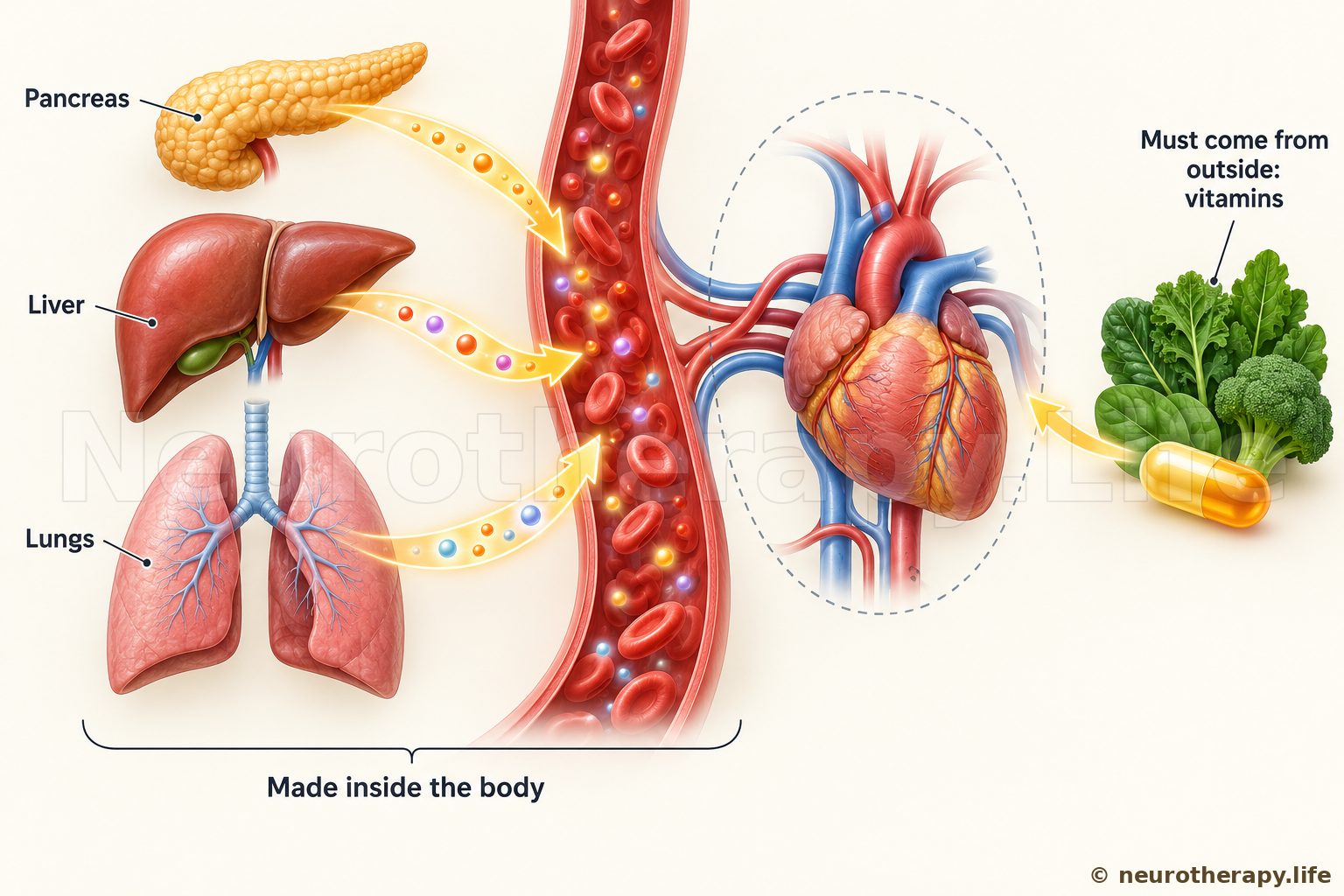
Every Heparin formula asks an organ to make something the body already has the machinery for: heparin from the liver and lungs, a plasmin-like enzyme from the pancreas, and more. The next step asks what happens when the body is short of something it cannot make at all.
Overview
Blood is safe while it moves. If it slows or stops, it begins to set, which protects us after a wound. A clot inside a vessel, though, is just as dangerous. A clot is built in steps: liver proteins, platelets, calcium and vitamin K come together and form a net of fibrin that traps blood cells. A clot already formed is later dissolved by plasmin.
The Heparin formulas work by asking the body to use machinery it already has. P. Heparin works through the pancreas, to digest the fibrin of an old clot, and through the liver and lungs, where most of the body's heparin is made. Its sister formulas add one step for a particular need, such as acidosis, the brain, the joints, a past blow or the digestive tract. The exact method is taught hands-on in the Neurotherapy (LMNT) course.
The therapy reports that clots in the periods stop after one or two treatments, that breathlessness eases first in heart blockage, and that recent paralysis responds quickly while old disease takes longer. Apart from paralysis and heart disease, these formulas are mostly given in pains that return after a few hours of relief.
Some things the body cannot make, however it is asked. A vitamin is exactly that: it must come from outside. That question opens the vitamin and genes formulas.
Key points
- Heparin prevents clots; plasmin dissolves them.
- Heparin formulas ask organs to make what they already can.
- P. Heparin is the parent; every sister formula adds one change.
- Pain that keeps coming back after relief may point to a clot.
- Vitamins are different: the body cannot make them at all.
Go deeper
Why blood must keep moving: clots, heparin and the P. Heparin idea
Why blood must keep moving
P. Heparin (plasmin)
P. Heparin, the parent formula
P. Heparin and its family: the conditions they are used for
The conditions the family is used for
How the right Heparin formula is chosen, and what Multi Heparin is
How the right Heparin formula is chosen
Blood vessels
The blood vessels and what blocks them
Thrombosis (blood clots)
Thrombosis: clots inside vessels
Vitamin and Gene Formulas: B₁₂, Folic Acid and the Genes Treatments
Next: the vitamin and genes formulas
Read the full guide
This topic is part of: The River: Heparin and the Heparin Formulas
Safety: when it is held back
- No Heparin treatment of any kind while blood is flowing or a wound is open, until it heals. P. Heparin (plasmin)
- Each sister formula carries the bars of the point it adds. Heart, kidney, diabetes, cancer and pregnancy each rule out certain members, so the choice is checked before treatment. How the right Heparin formula is chosen, and what Multi Heparin is
- Neurotherapy (LMNT) works alongside your medical care. Do not stop or change any medicine on your own, especially a blood thinner; ask the doctor who prescribed it.
Watch

Shows the P. Heparin formula: (8) Pan at the top of the thighs, (7) Liv on the thigh and forearm, and (8) Chest Only with the palms on the chest. In the video it is given as the last part of the Angina treatment, to support circulation.

A demo of the M. Heparin formula — the Heparin formula headed by Medulla ((6) Medulla, (8) Pan, (7) Liv, (8) Chest Only) — used for neck and shoulder pain and for headache that keeps coming back.
This page explains what a Neurotherapy (LMNT) treatment is for; it is not a self-treatment guide and does not diagnose. Neurotherapy (LMNT) works alongside your medical care — keep taking the medicines your doctor prescribed.