Constipation at a glance: its four causes and how Neurotherapy (LMNT) reads it
Constipation is a symptom, not a disease. Neurotherapy (LMNT) looks for four causes behind it: too little water, too little roughage, a sluggish large bowel and too little digestive juice, along with the thyroid and the acid-alkali direction.
Overview
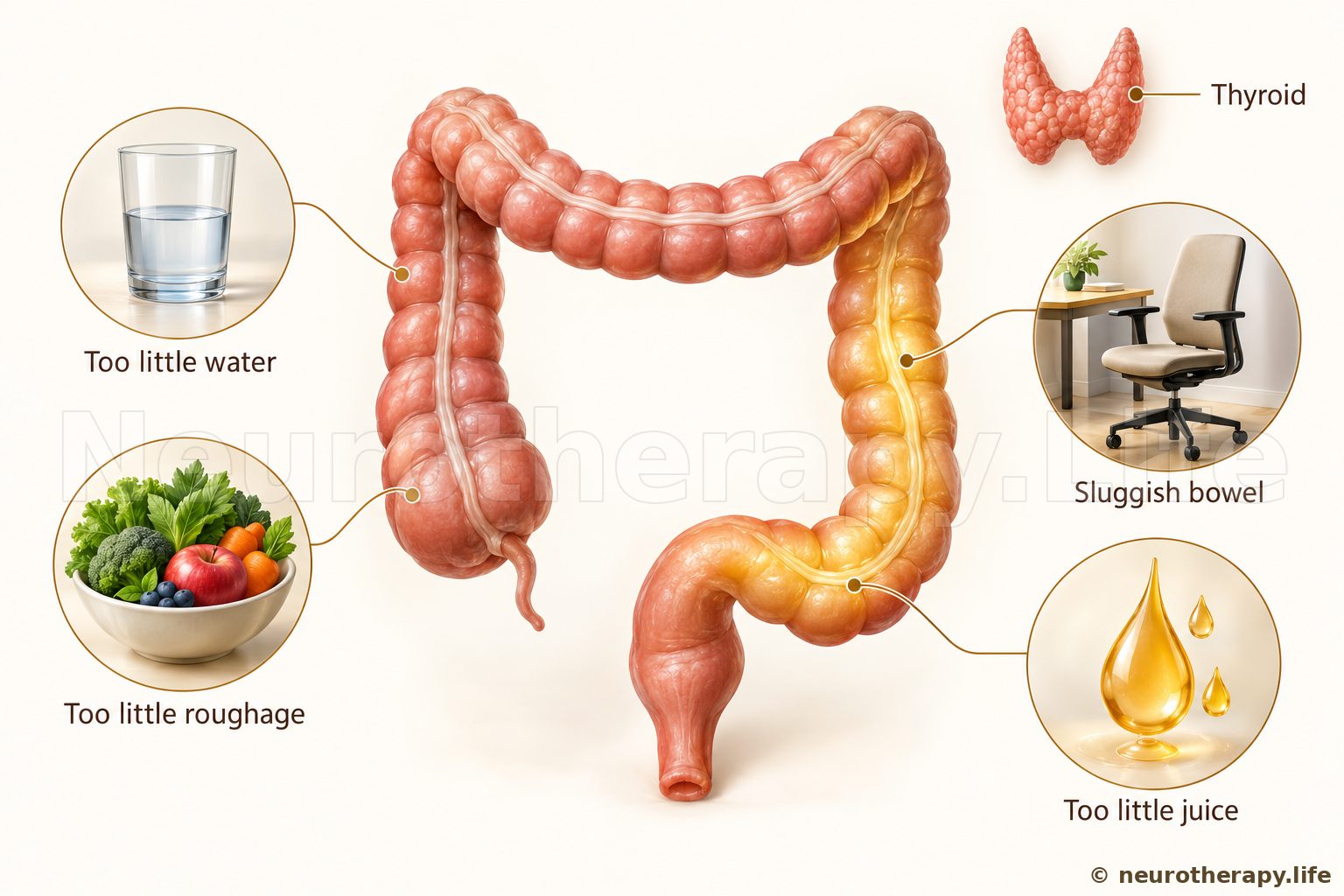
Constipation is a sign that the digestive tract is not working well. A person counts as constipated by effort and feeling, not by a number: straining, hard lumpy stool, a sense that it is not finished, a feeling of blockage, or fewer than three motions a week. Normal habit runs from about three a day to three a week.
Neurotherapy (LMNT) names four causes that add up: too little water, too little roughage, a sluggish large bowel from sitting all day or from age, and too little digestive juice. Water matters most. When the body is short of water it holds water back at every exit, and the bowel draws water out of the stool, mostly on the left side, leaving it dry and hard. Tea and cold drinks do not replace plain water.
The therapist reads the direction from the two flanks. Tenderness at Mu° goes with hard stools and the acidic side; tenderness at Liv° goes with soft, frequent stools. The work then supports the left run of the large bowel in the direction its natural wave travels. The thyroid is supported too, because a gland working too slowly slows the bowel. In children this can show as very hard constipation with dullness, and in women as early or heavy periods.
Long constipation can also inflame the lining of the gut, felt as pain at the Mu point, and that inflammation is addressed too. Improvement usually arrives in a set order: less effort first, fewer minutes on the toilet, the feeling of being finished, a better stool form, a settled frequency, and only last the complaint the patient came with.
Key points
- Constipation is judged by effort and feeling, not by a daily count.
- Water in decides water out; drink plain water through the day, not with meals.
- Tenderness at Mu° points to the acidic side behind hard stools.
- A slow thyroid can be one hidden cause, especially in children.
- Improvement comes in order, and the main complaint moves last.
Go deeper
Constipation
Constipation: the full condition page
Round Normal
Round Normal, used for ordinary constipation
Const
Const, the point that is tender in constipation
Thrd
Thrd, the thyroid point
Hypothyroidism
A slow thyroid and a slow bowel
Reading the stool: the seven stool forms and what they mean
The seven stool forms and what they mean
What the Bowel Tells You: Constipation, Stool and Water
What the bowel tells you: the full guide
Read the full guide
This topic is part of: What the Bowel Tells You: Constipation, Stool and Water
Safety: when it is held back
- If there is no tenderness at Mu°, the acid treatment is not given. ATF, form (a)
- In constipation, Gas Only, (10) Medulla and Dys are blocked because they can make it worse. Dys
- A new, lasting change in bowel habit, especially after forty, or any blood in the stool, goes to a doctor this week.
- A child with very hard constipation and slowness at school should have a simple thyroid blood test. Hypothyroidism
This page explains what a Neurotherapy (LMNT) treatment is for; it is not a self-treatment guide and does not diagnose. Neurotherapy (LMNT) works alongside your medical care — keep taking the medicines your doctor prescribed.