BOF (Bottom of Feet): easing numbness, pain and burning from the toes to the calves
BOF draws the muscles and nerves of the lower leg away from the heel, towards the knee. It is given in three positions and is used for numbness, pain, burning or any trouble from the toes, soles and heels up to the calves.
Overview
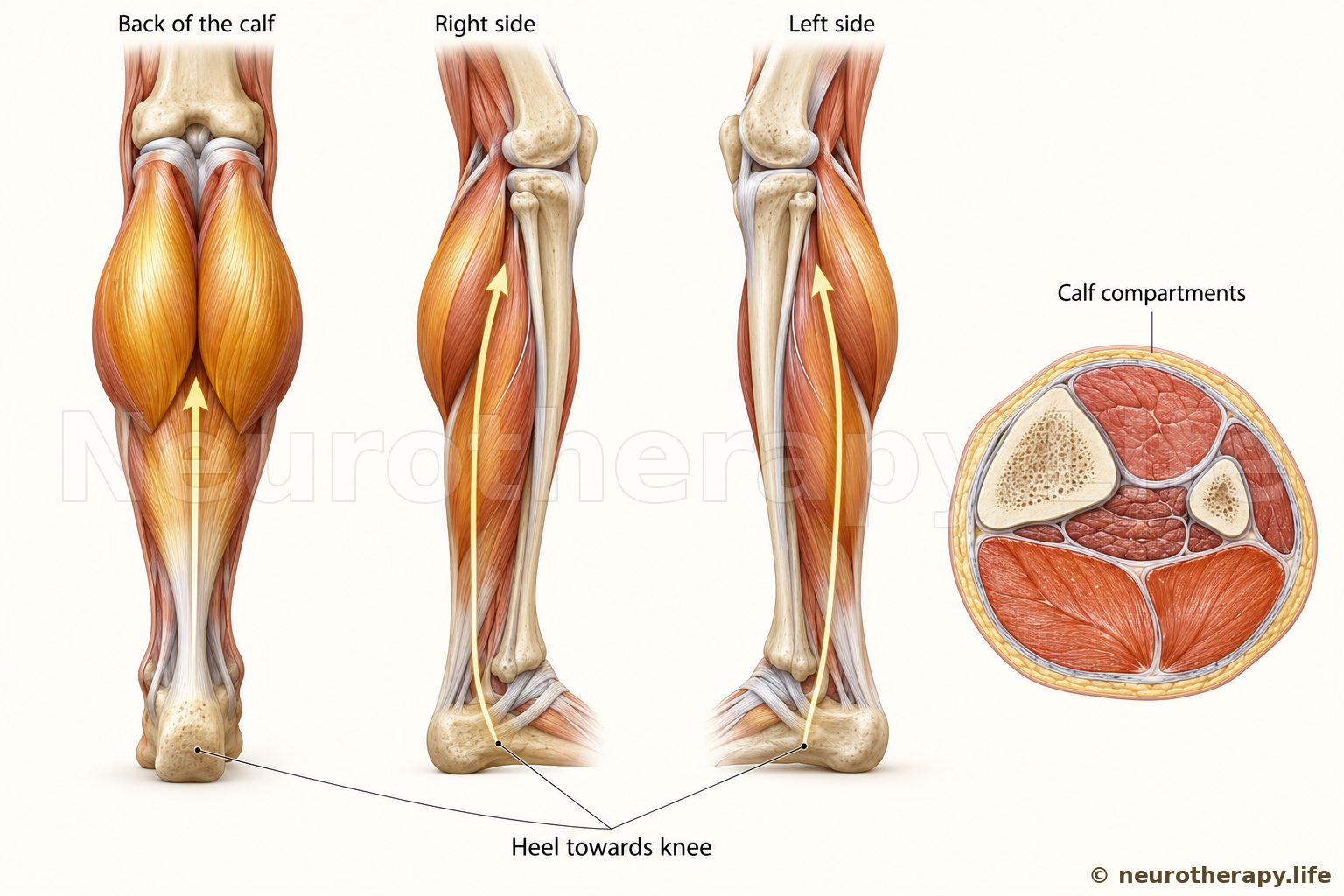
BOF stands for Bottom of Feet. It is described as a fine example of Guruji's original way of thinking: the muscles and nerves of the lower leg are drawn away from the heel, towards the knee. It is used for numbness, pain, burning or any kind of trouble from the toes, the soles and the heel up to the calves.
It is given in three positions in turn: face down, then on the right side, then on the left side, with pillows under the legs. The therapist works with the soft middle of the soles, weight carried on chairs, walking up along both calves. Turning the whole patient matters. The calf is made of separate compartments around two bones, and just angling the leg at the hip does not bring the side compartments under the sole. For an ordinary patient, these three faces are enough.
After a sprain, a fourth side is added: BOF — all 4 sides, given lying on the back, pushing the tissue from in front of the heel up towards the knee. The source says the relief can come remarkably quickly, but a patient is not told to expect a miracle; they judge for themselves.
The calf is often called the body's second heart. The deep veins run between the calf muscles and have one-way valves, so each time the calf tightens, blood is pushed one stage up the leg. When a person stops walking well, that pump slows. The exact method is taught hands-on in the course.
Key points
- BOF works from the heel towards the knee, in three positions.
- The patient is turned onto each side; angling the leg is not enough.
- After a sprain, a fourth side, the front of the leg, is added.
- Big Toe Gas, a short press on the big toe, is a related treatment used for gas in the stomach.
- A numb foot is checked before any weight is used on it.
Go deeper
BOF
The full point page for BOF
BOF — all 4 sides
BOF — all 4 sides, added after a sprain
Big Toe Gas
Big Toe Gas, for gas in the stomach
Burning feet
Burning in the feet and soles
Numbness in the legs
Numbness in the legs
Sprain and injury
Sprain and injury
Varicose veins
Varicose veins and the calf pump
Knee, Leg and Foot: Neurotherapy (LMNT) for Knee Pain and the Lower Leg
The full guide to the knee, leg and foot
Read the full guide
This topic is part of: Knee, Leg and Foot: Neurotherapy (LMNT) for Knee Pain and the Lower Leg
Safety: when it is held back
- In long-standing diabetes a foot can lose feeling. Such a foot cannot warn of damage, so sensation is checked first. Where feeling is reduced, only light hand contact is used, never body weight and never for long. Diabetes
- Any blister, ulcer, red patch, new change of shape, or hot swollen foot in such a patient is treated as urgent and shown to a doctor the same day. Wound healing
- In Big Toe Gas the foot is placed so that it does not pinch the patient's skin; it is not given on a red, hot, very tender toe, as in gout. Gout
- One leg that is hot, swollen and tender — especially after surgery, a long illness, a long journey or pregnancy — may hide a clot. That leg is not rubbed or worked on; it is sent to a doctor urgently. Thrombosis (blood clots)
This page explains what a Neurotherapy (LMNT) treatment is for; it is not a self-treatment guide and does not diagnose. Neurotherapy (LMNT) works alongside your medical care — keep taking the medicines your doctor prescribed.