The Acid point: a short, firm press along the outer thigh
Acid is a side-lying Neurotherapy (LMNT) point given along the outside of the lower thigh, from the waist to the knee. It is used to reduce the symptoms of acid forming in the blood, and the pressure is kept very short because the point can be very painful.
Overview
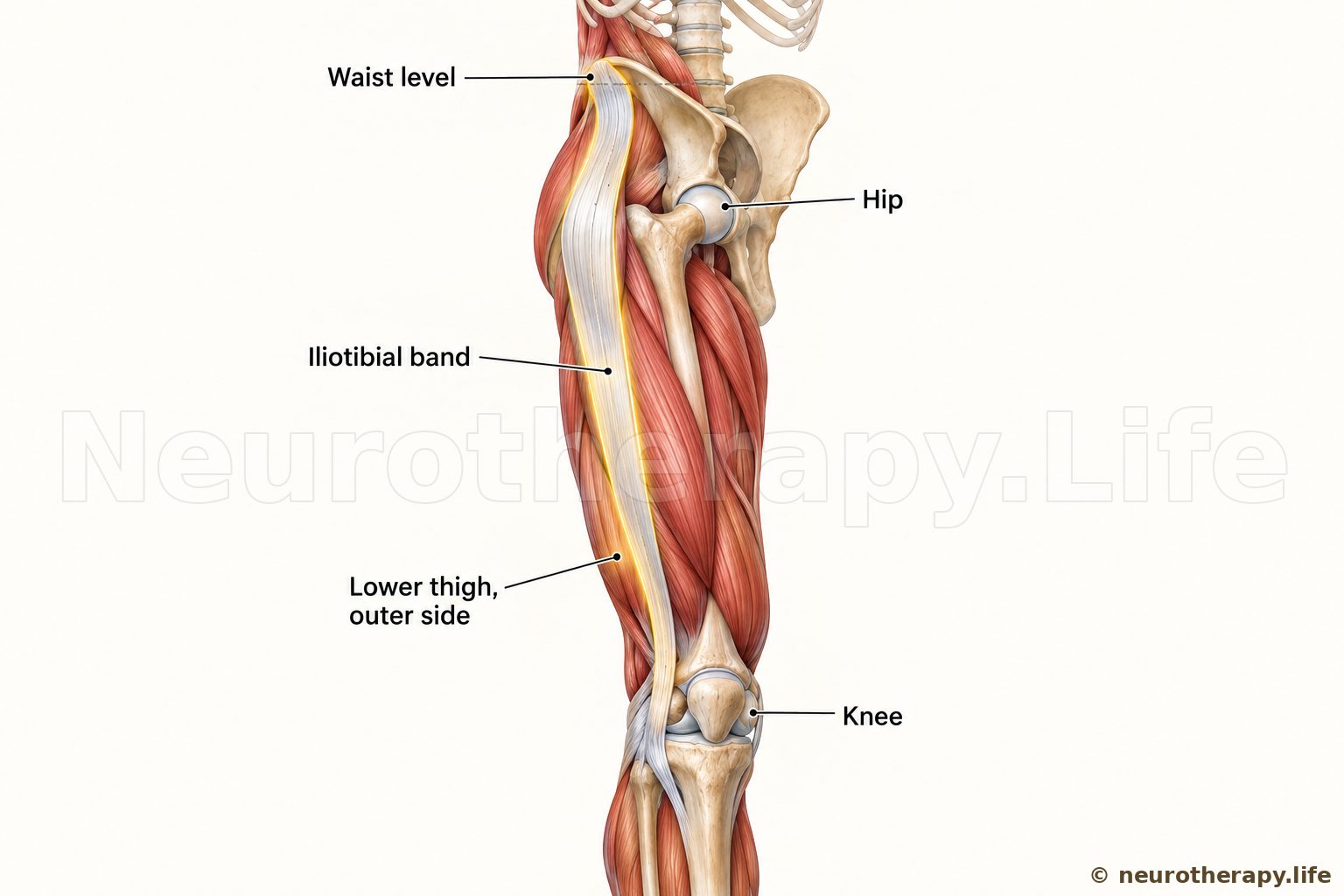
For Acid the patient lies on the right side with the top shoulder turned a little outward. The right leg stays straight and long. The left leg is bent and rests on pillows, so that its knee is at the level of the waist, and a pillow supports the head. The therapist then works with the middle of the sole of the foot along the outer side of the right thigh, the lower one, from the waist down to the knee.
This surprises students: the thigh that is worked is the one underneath, not the one carefully set on pillows. The pressure is kept very short, because the pain here can be very great. The patient is told before the foot goes down. When a patient seems unable to bear it, the cause is usually the position, not the patient: the shoulder has rolled in, or the upper knee has sunk as the pillows flattened.
Acid is used to reduce the symptoms of acid forming in the blood. Under the sole lies a broad, tough strap of tissue running down the outer thigh, one of the most pressure-sensitive places in the body. The acidity of the blood itself is held in a very narrow band by the lungs and kidneys, so a person can feel acidic while their blood stays normal. The exact method is taught hands-on in the course.
Key points
- Acid is given lying on the right side, on the lower (right) thigh, from the waist to the knee.
- The pressure is very short, because the point can be very painful.
- It is used to reduce the symptoms of acid in the blood.
- If it cannot be tolerated, check the position before blaming the patient.
Go deeper
Acid
The full page on the Acid point
Acidosis
Acidosis: the acid picture in the body
Fluid or Alkali: the mirror of the Acid point, on the left thigh
Fluid or Alkali, the mirror of Acid
Fluid or Alkali
The Fluid or Alkali point
Lying on the side: the pillow rules that come before every side-lying point
The pillow rules for side-lying points
The Two Kingdoms: Acidic and Alkaline Bodies
The two kingdoms: acid and alkali
Correcting the Two Kingdoms: Acid and Alkali Formulas
How acid and alkali imbalance is corrected
On the Side: Treatments Given Lying on One Side
The full guide to the side-lying treatments
Read the full guide
This topic is part of: On the Side: Treatments Given Lying on One Side
Safety: when it is held back
- A painful, swollen or warm calf or thigh, or one leg swollen and not the other: nothing is given, and the patient sees a doctor the same day. This can be a blood clot. Thrombosis (blood clots)
- Thin bones, long use of steroid tablets, a past fracture from a small injury, frailty, or cancer that may have reached bone: the hand replaces the foot, lightly, or the point is left out. Osteoporosis
- Not over a hip that has been replaced or operated on. Light only for anyone on blood thinners or with a bleeding disorder. In pregnancy, no deep pressure near the abdomen or pelvis. Pregnancy care
- The exact method is taught hands-on in the course, under a trained therapist. Please do not try it on yourself or others from this page.
This page explains what a Neurotherapy (LMNT) treatment is for; it is not a self-treatment guide and does not diagnose. Neurotherapy (LMNT) works alongside your medical care — keep taking the medicines your doctor prescribed.