Neurotherapy vs physiotherapy, acupressure and massage: what is the difference?
People often ask whether Neurotherapy is "like physiotherapy" or "a kind of acupressure". The honest answer is that all four — Neurotherapy, physiotherapy, acupressure and massage — use the hands and no medicine, and that is where the likeness ends. They work on different things, for different reasons, and the best choice depends on what is wrong.


The one-line difference
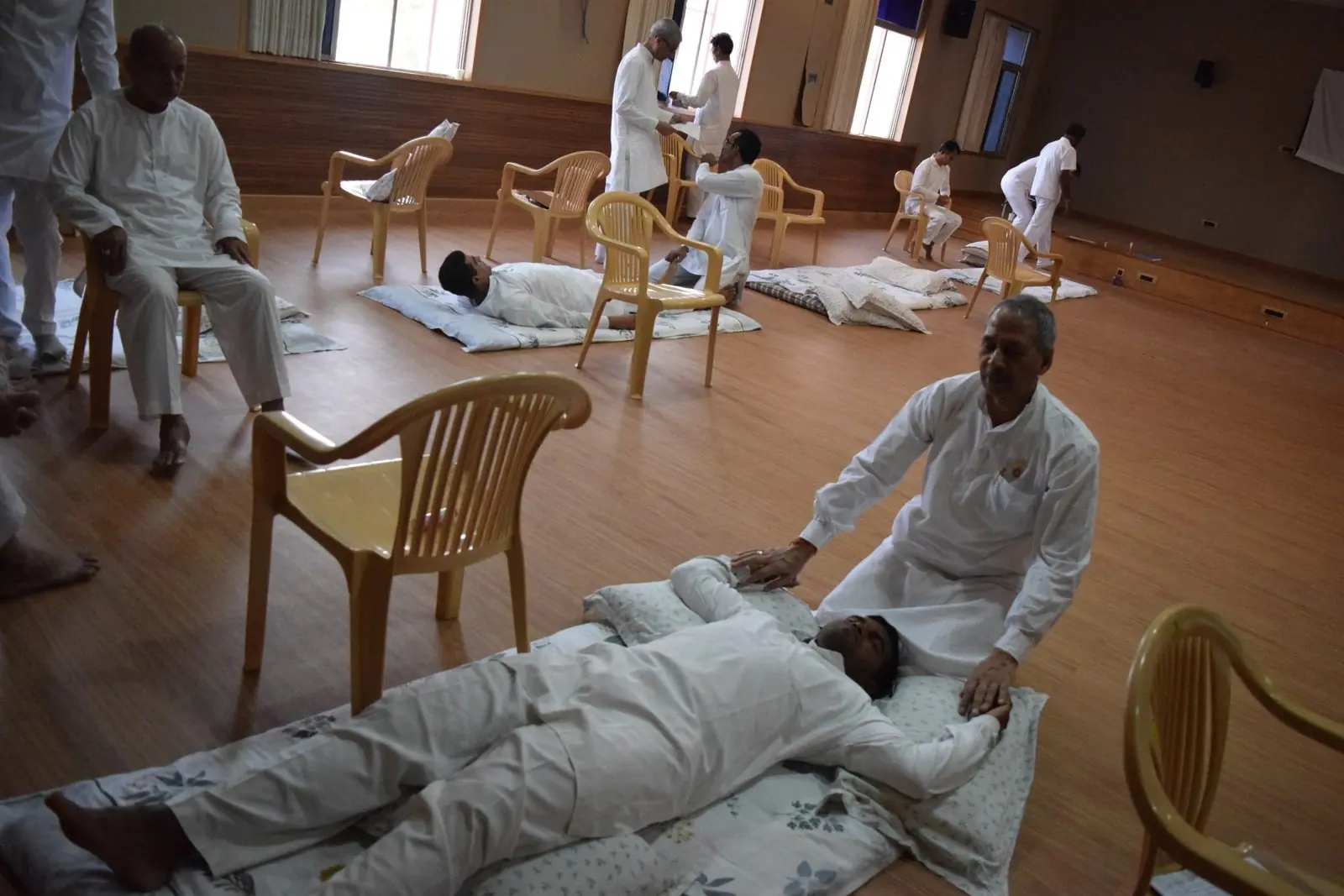
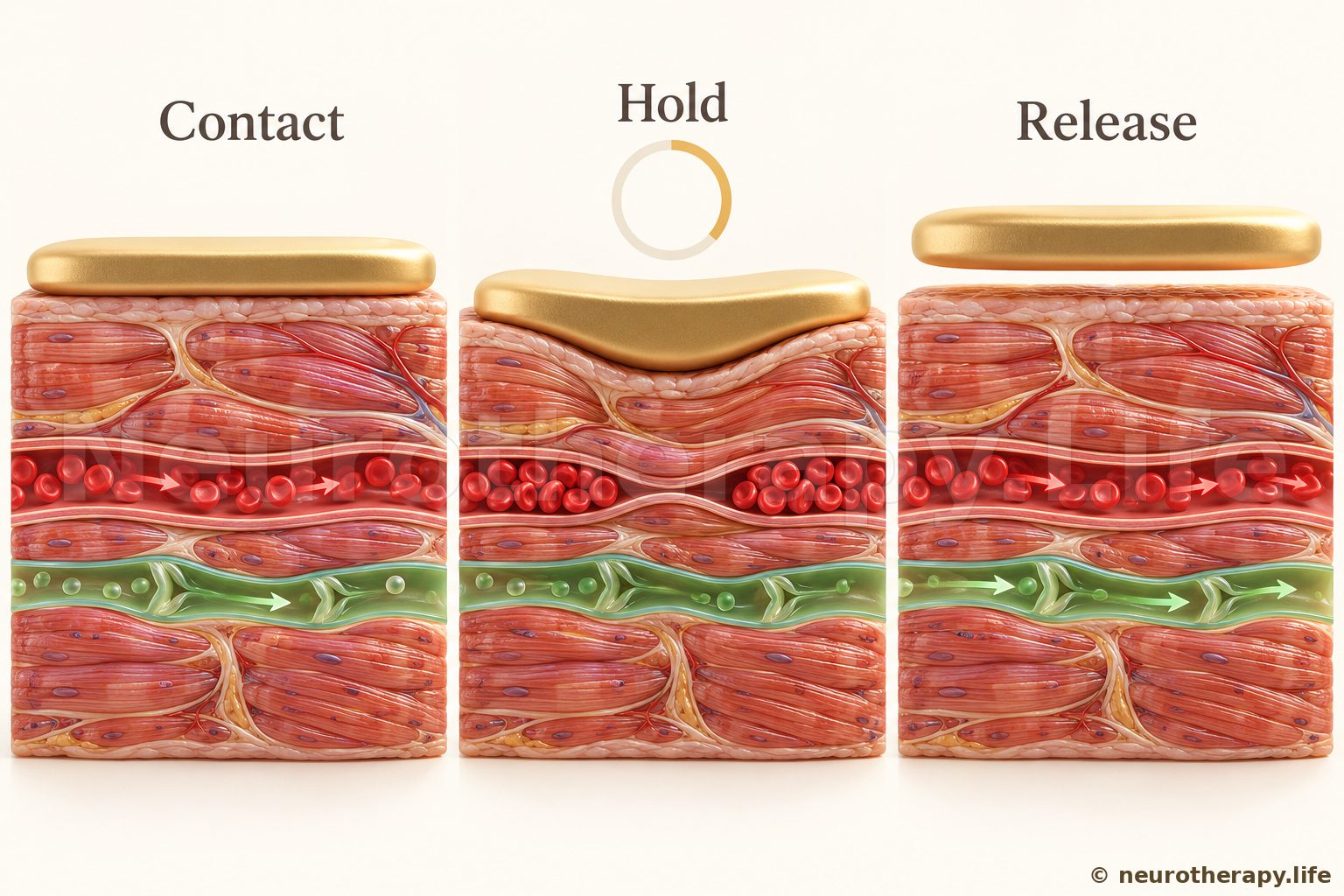
Physiotherapy treats the part that hurts — a joint, a muscle, a nerve — with exercise, movement, stretching and machines, to restore movement and strength. Neurotherapy treats the organ that is under-working, found by touch at points around the navel, with timed pressure on the limbs and trunk, to restore blood and lymph supply so the body corrects the root. Acupressure presses points on energy channels called meridians. Massage relaxes muscle and skin, with no point map and no fixed order.
So a physiotherapist asks "where does it hurt, and how does it move?" A Neurotherapist asks "which organ is short of supply, and which direction is the body leaning?" — and then presses the thigh for a stomach problem, or the low back for a blocked nose, because the muscle is the door and the organ is the room. Both questions are good questions. They are different questions.
Side by side
| Neurotherapy (LMNT) | Physiotherapy | Acupressure | Massage | |
|---|---|---|---|---|
| Works on | Blood and lymph supply to inner organs and glands; the nervous system | Muscles, joints, nerves and movement of the painful part | Energy channels (meridians) and their points | Muscle tone, skin, relaxation |
| Basis | Physiology — how the body works; a folk root in navel setting | Anatomy and biomechanics; evidence-based rehabilitation | Traditional Chinese medicine | Many traditions |
| Diagnosis | Mu°/Liv° at the low back and 18 pain points, re-checked every visit | Movement tests, strength, posture, imaging where needed | Pulse, tongue, meridian theory | Usually none |
| Tool | Sole of the foot (adults) or palm (children, elderly, frail); weight on two chairs | Hands, exercise, heat, ultrasound, TENS, traction | Fingers, thumbs, sometimes tools | Hands, oil |
| Pressure | Broad, spread over a wide area, fixed seconds, fixed angle and order; never painful | Varies with the technique and the exercise | Firm, on one small point | Flowing strokes |
| Clothing | Fully clothed; pressure over the clothes | Usually clothed; the area may be exposed | Clothed or exposed | Usually exposed, with oil |
| Typical uses | Digestion, glands and hormones, joints and back, nerves, women's and children's problems | Injury, after surgery, stroke rehabilitation, sports, posture, mobility | Pain, nausea, stress | Relaxation, stiffness, stress |
| Medicines | None used; yours continue | None used; yours continue | None | None |
Where physiotherapy is the right first choice
After a fracture, a ligament tear or joint surgery, the limb has to be moved, loaded and strengthened on a schedule, and that is physiotherapy's home ground. The same is true of stroke rehabilitation, sports injuries, posture correction and getting someone walking again. A physiotherapist is a university-trained health professional, and in these situations you should see one. Neurotherapy can run alongside — to support digestion, sleep and the glands while the limb heals — but it does not replace the exercise programme.
Where Neurotherapy is the right first choice
When the complaint has no injury behind it and keeps coming back — acidity, gas, constipation, undigested food, a knee that aches without ever having been hurt, hair fall, period problems, thyroid or sugar values that drift, poor sleep, low energy — the fault is usually an organ that is under-working, not a part that is damaged. That is Neurotherapy's home ground. A knee is a good example: physiotherapy strengthens the muscles around it, which helps; Neurotherapy also asks why the joint is inflamed in the first place and works on the digestion and glands behind it.
It also reaches people the others cannot: a one-day-old baby, a bed-ridden elder, someone with osteoporosis — treated with the palm, with named lighter formulas. And because it needs no equipment, a family member can learn the basic formulas and give them at home.
Why it is not acupressure, in the founder's own words
Guruji was clear that Neurotherapy has no relation to acupressure or to any other therapy, though it openly owns one folk root: navel setting. Acupressure works on meridians; Neurotherapy works on circulation and the nervous system, based on physiology. Three things belong to Neurotherapy alone: its own diagnosis points around the navel, its own fixed timing of each press, and the order in which organs are stimulated — "right follows left" for the bowel, with the wave the gut is already making. Acupressure digs into one small point; Neurotherapy spreads pressure over a broad area so that even a small child feels no distress.
Can they be combined?
Yes, and they often are. Tell each practitioner what else you are taking. Keep the two on different days where possible, so that a change can be read correctly — a Neurotherapist re-checks your pain points at every visit and needs to know what produced the change. Nobody in any of the four stops your medicines; that remains your doctor's decision. If you are unsure which to start with, an online consultation with Dr. Diwakar Shukla will tell you honestly whether Neurotherapy is the right first step for you.
Watch

Frequently asked questions
Is Neurotherapy a kind of physiotherapy?
No. Physiotherapy restores movement and strength in the painful part with exercise and techniques. Neurotherapy restores blood and lymph supply to an under-working organ with timed pressure, found by its own diagnosis points. They can run alongside each other.
Which should I choose for knee pain?
If the knee was injured or operated on, start with physiotherapy. If it aches without ever having been hurt, or keeps swelling, Neurotherapy asks why the joint is inflamed and works on the digestion and glands behind it. Many people use both.
Is it just massage with the feet?
No. Massage has no point map, no diagnosis and no fixed order. In Neurotherapy the place, the seconds of each press, the angle and the sequence are all fixed, and the pain points are checked before and after. The foot is only the tool; the method is what makes it work.
Does Neurotherapy use acupressure points?
No. Its diagnosis points sit around the navel and at the low back, and its treatment stations are on the broad muscles of the limbs and trunk, chosen from physiology, not from meridians.
Read next
Want to learn it, or try it?
Join the Foundation Course in Neurotherapy, or book an online consultation with Dr. Diwakar Shukla. Neurotherapy works alongside your medical care — never instead of it.
This page is educational and does not replace medical advice. In an emergency call 108 / 112 first.