Is Neurotherapy safe? Side effects, who should not take it, and the rules every therapist follows
Neurotherapy uses no medicine, no injection and no instrument — only timed pressure over the clothes. Given correctly, it is safe from a newborn to a hundred-year-old. "Given correctly" is the whole point: the founder's first rule was that no treatment may be given that worsens a patient even by a fraction of one percent. This page tells you what that rule means in practice.


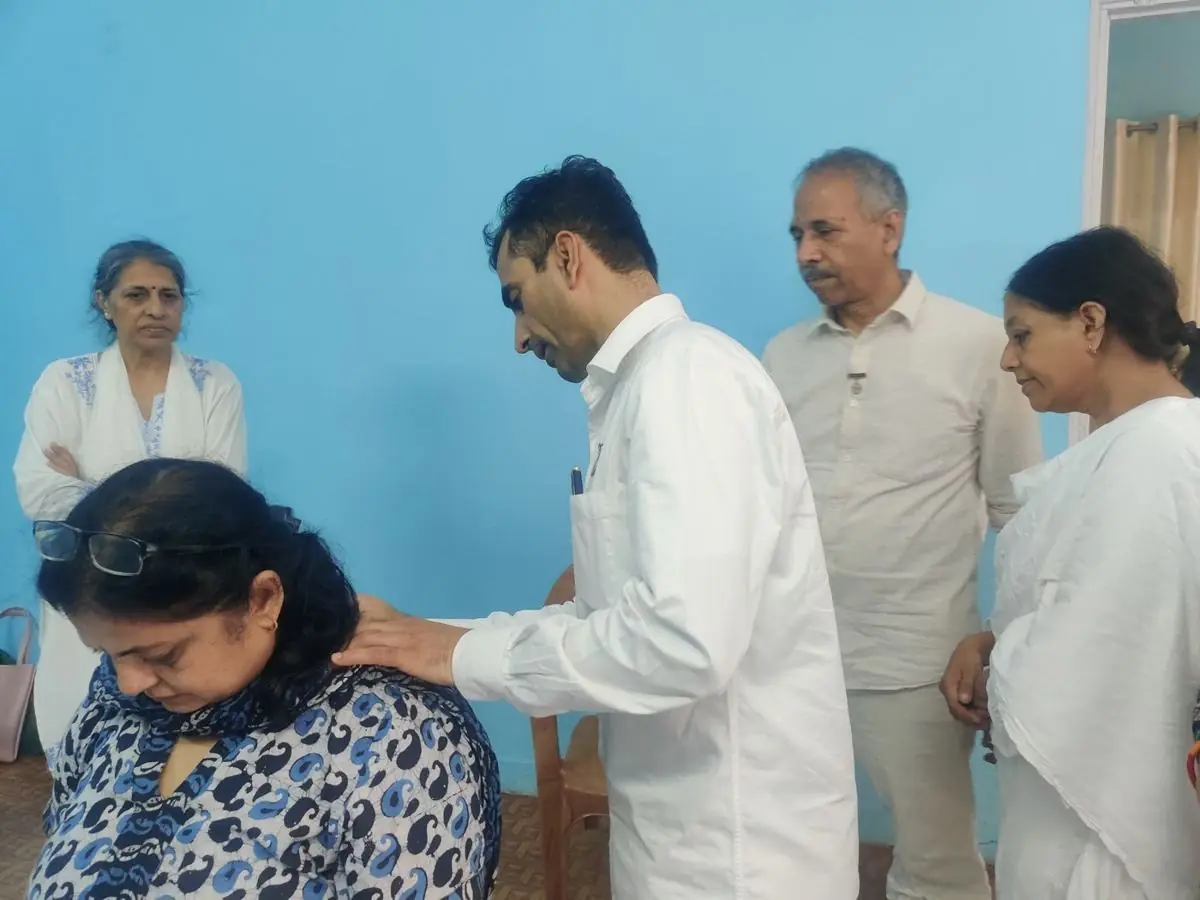
Why it is gentle by design
Three things make the pressure safe. The therapist stands between two chairs and rests his weight on his arms, so only as much weight as the treatment needs reaches you, and it can be taken back in an instant. The soft middle of the sole, or the flat of the palm, spreads the force over a broad area — nothing is dug into one spot. And every press has a fixed length in seconds; the time is a ceiling, never a minimum, because holding longer works against the body, not for it.
Weight is not what makes the therapy work; the right place, time, angle and order are. So a lighter tool loses nothing. Small children, the elderly, the very weak and anyone with osteoporosis (bones that have become porous and weak) are treated with the palm only, and there are named lighter formulas for them. A frail patient is never given a secretly shortened press — the tool changes, the method does not.
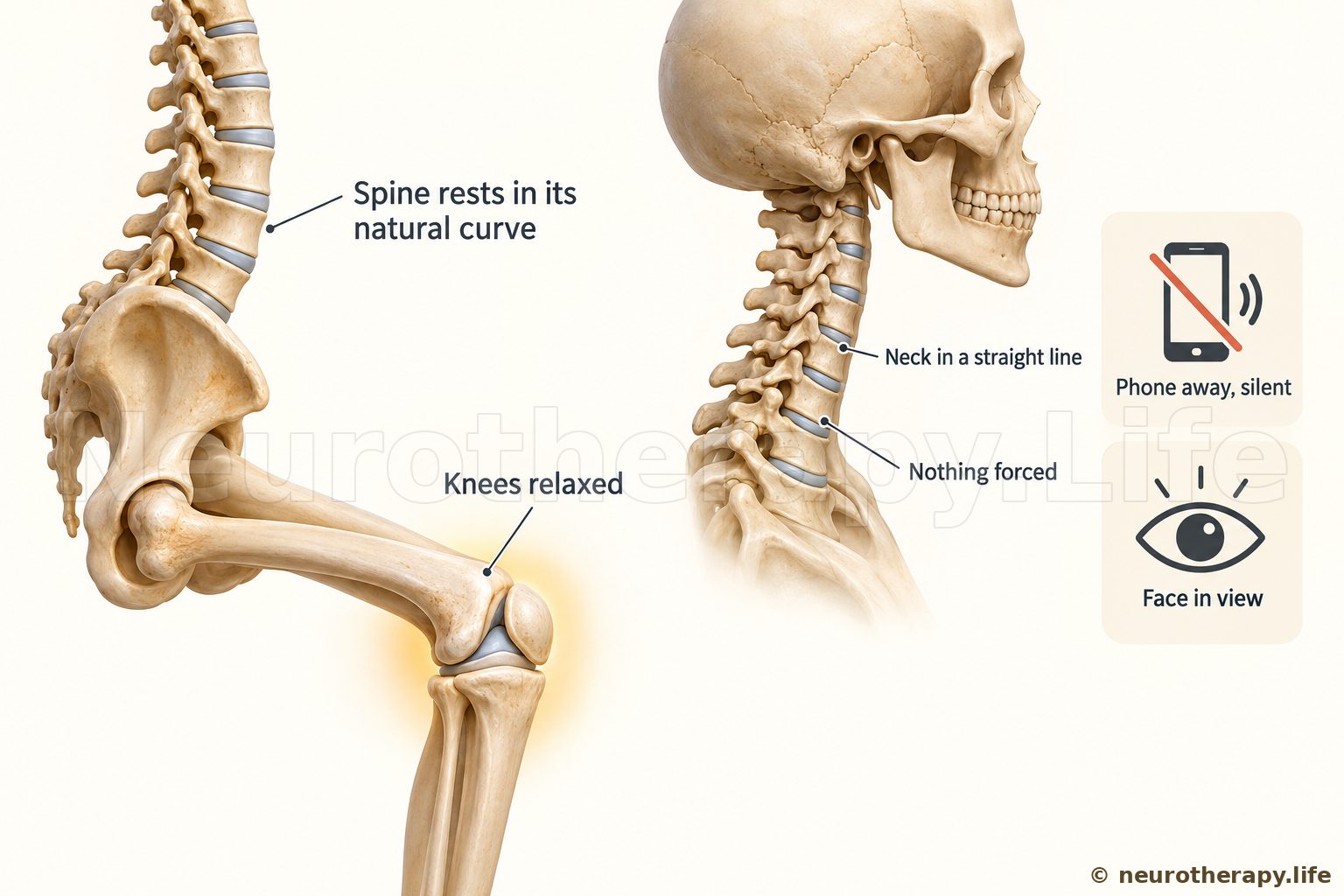
Side effects you may notice
Most people feel nothing but a lighter body, better hunger and better sleep after the first few sessions. A few things are normal and pass: a little heaviness or tiredness on the day of a long treatment, more urine or a bowel movement soon after (circulation to the gut has improved), and mild soreness where a muscle was tight. Rising too fast after lying down can bring on giddiness, which is why you roll onto your side and get up slowly.
Pain during a press is not normal, and it is the one thing the therapist needs from you. Wrong angle is the only part of a press that hurts — pressure across the muscle's direction or on an edge. Say so at once; the angle is changed or the weight reduced without argument, and the treatment loses nothing by it. Pain kept silent may remain after treatment or leave weakness. You may also ask to stop at any moment, without a reason.
If any trouble increases after a session, the therapist must be told at once and it is written on your card. "More" is never the answer in this therapy: nobody presses harder or holds longer to make it work better. More benefit comes only from repeating correctly.
What to tell your therapist before the first session
A proper first visit starts with questions, not pressure. The therapist asks about diabetes and blood pressure before every new patient's first treatment, about pregnancy, about a pacemaker or any implant, about surgery, fractures or thin bones, about fits, and about every medicine you take. Bring your recent reports. None of this is to exclude you; it decides which points are held back and which formula is chosen.
- Diabetes, blood pressure, heart disease and any heart surgery or stent.
- Pregnancy, or trying to conceive; breastfeeding; your menstrual dates.
- Cancer — past or present — and any treatment for it.
- Osteoporosis, a fracture from a small knock, steroid tablets taken for years, or long bed-rest.
- A slipped disc, spinal surgery, a pacemaker, a joint replacement or any implant.
- Fits (epilepsy), a stroke, or a recent injury; blood thinners; a child's age and weight.
Who is not treated, or treated differently
During the menstrual period, women do not take treatment for other problems; they may come only for period problems such as very heavy, non-stop or very scanty bleeding, pain or clots. In pregnancy a therapist treats only with specific, limited formulas, never the general ones, and no pills of any kind are taken without the doctor — their effect reaches the child.
Cancer is treated with honesty first: Neurotherapy does not cure cancer, and we say so plainly. Supportive care alongside the oncologist is possible, but a whole group of points and formulas is never used in a cancer patient, so this is never self-treatment and never a video — it is a consultation. Likewise, certain strong formulas such as the (30) Medulla treatment are not given in heart disease, diabetes, cancer, pregnancy, or to people over eighty with blood-pressure concerns.
Growing children have points held back to protect their height, because some gland points can close the growing edge of the bones early. The spine, the neck and a slipped disc are never self-treated from a video; they need a trained therapist in the room. And nobody — at any age — stops a medicine for fits, blood pressure, diabetes or thyroid because they are taking Neurotherapy.
Warning signs that need a doctor first
A good therapist sends you to a doctor before touching you when the body is reporting an emergency. Call emergency services (108 / 112) or go to a hospital first — Neurotherapy works best alongside your existing medical care — if you have:
- Chest pain, pressure or breathlessness; a sudden weakness of the face, arm or leg, or slurred speech.
- Fever with a painful loin, blood in the urine, new bleeding with stool, unexplained weight loss or a new lump.
- Blue nails or lips, a cold pale limb, or a wound that is turning black.
- A baby or small child with diarrhoea and a dry mouth, little urine, floppiness, blood in the stool or a fever beyond a few days.
- New confusion, a sudden change of personality, losing touch with reality, agitation with fever, or any talk of ending life.
- Severe drowsiness, confusion or cramping — real acidosis or alkalosis measured in the blood is a hospital matter.
The rules a trained therapist follows
Before a single point is pressed, the therapist arrives prepared: covering clothes, short nails, clean feet, nothing hard on the body. The sheet is checked by hand every time, because a small object under a bone can turn gentle pressure into injury. Pillows go only where the treatment needs them — never under the head, back or waist by habit. Consent has five parts, is spoken aloud, and is renewed for every new area of the body. A chaperone is offered, you stay covered, and pain is always believed.
Then the fixed check: Mu° and Liv° at the low back are compared before any acid or alkali treatment, because the Acid Treatment Formula is never given to an alkaline body and the Alkali Treatment Formula never to an acidic one. The blocked points for your condition are looked up before the formula starts. The pain points are re-checked at the end and written on your card. Every point has its stated count; every formula its order and its rests. These are not customs — they are the safety system of the therapy, and the Foundation Course teaches them before it teaches a single formula.
Self-therapy at home: what is safe, and what is not
Simple self-therapy for everyday complaints — gas, acidity, constipation, a stiff knee — is what our free workshops and videos teach, and it is safe when you follow the count and the timing exactly and stop if anything hurts. Three things are not for home videos: the spine and neck, blood pressure, diabetes and the eyes, and anything involving a cancer patient. For those, book an online consultation and let a therapist examine you first.
Watch


Frequently asked questions
Are there any side effects?
No medicine means no drug side effects. After a session some people feel a little tired or heavy, pass more urine or stool, or have mild soreness where a muscle was tight — all of which pass. Pain during a press is not normal; say so and the angle is changed.
Can I take Neurotherapy with my medicines?
Yes — and you must keep taking them. Nothing here interacts with a medicine. If your complaint goes completely, ask your prescribing doctor whether the dose should change. The therapist never changes a dose.
Is it safe in pregnancy?
Only in the hands of a trained therapist who knows you are pregnant, using the specific limited formulas for pregnancy. General formulas and strong formulas such as (30) Medulla are not given. Tell the therapist before the first session.
Can it be given to someone with osteoporosis or after a fracture?
Yes, with the hand only, lightly, and never over a healing fracture. Frailty is a finding, not a birthday: the therapist decides from what you say and what the hand feels, not from your age.
Does Neurotherapy cure cancer, diabetes or thyroid?
No therapy should promise that, and we do not. Neurotherapy does not cure cancer. In diabetes and thyroid, patients have reported improved values over a course while continuing their medicines; the dose is always the doctor's decision.
How do I know a therapist is properly trained?
They ask before they press: diabetes, blood pressure, pregnancy, medicines, implants. They check the sheet, offer a chaperone, take spoken consent, compare Mu° and Liv°, keep a card, and stop the moment you say it hurts. A therapist who skips the questions is skipping the safety system.
Read next
Want to learn it, or try it?
Join the Foundation Course in Neurotherapy, or book an online consultation with Dr. Diwakar Shukla. Neurotherapy works alongside your medical care — never instead of it.
This page is educational and does not replace medical advice. In an emergency call 108 / 112 first.