How to drink water: seven everyday rules and the reason for each
Neurotherapy (LMNT) gives simple rules about how water is drunk and which water is refused, each with its own reason. They cost nothing and can be kept in any household.
Overview
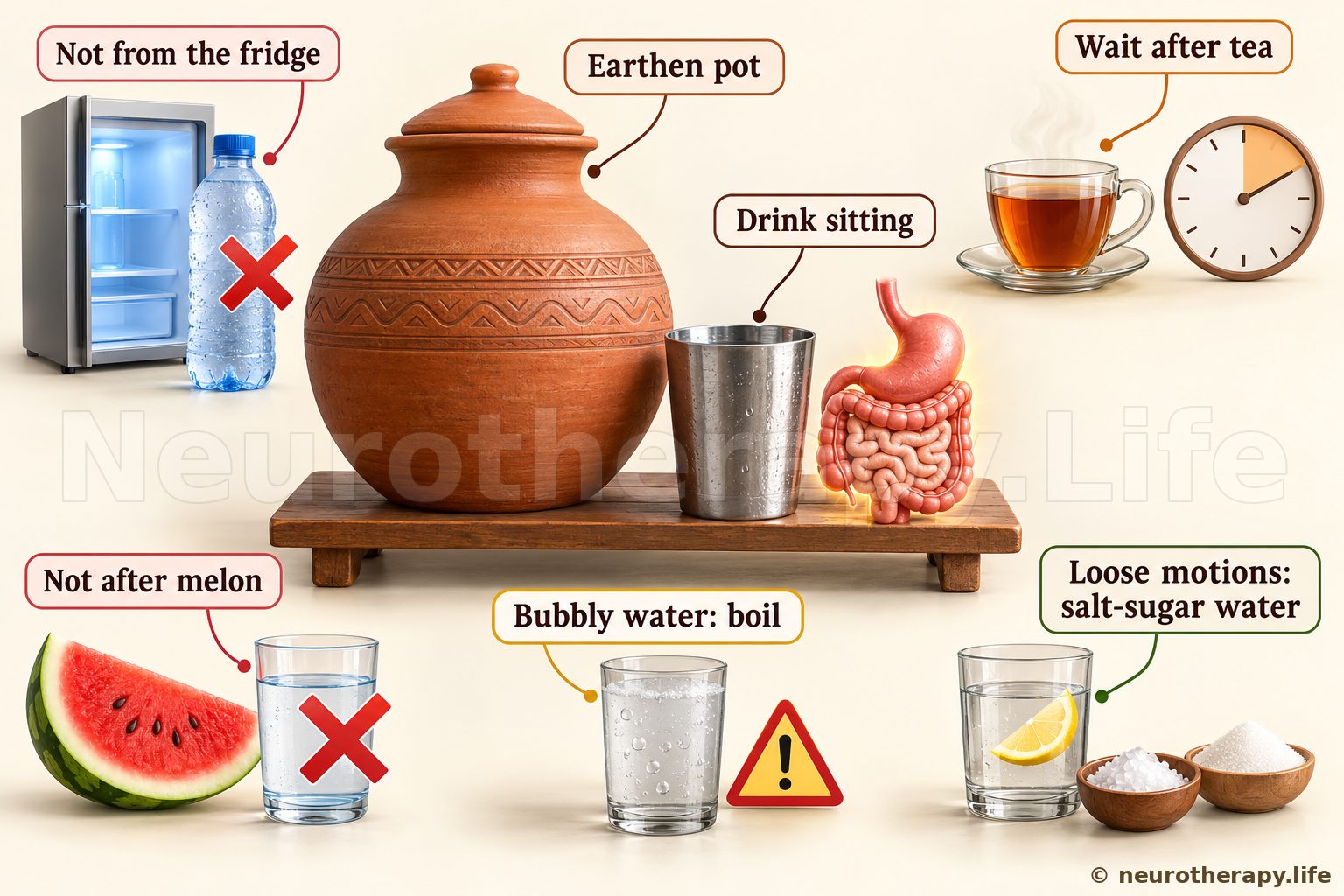
Drink water sitting down. Drinking while standing is said to pull blood away from the calves. A person who sits to drink also drinks slowly, and an older person who sits does not fall.
Keep drinking water in an earthen pot such as a matka or surahi, not in the fridge. Warming very cold water inside the body wastes the body's energy. A clay pot keeps water cool without making it cold. If there is no pot, take the bottle out of the fridge a while before drinking.
No cold water first thing on waking, because it provokes phlegm; the first water of the day should be at room temperature or warm. No water just after milk or tea, because it raises alkali and weakens the gums. After your tea, wait, then drink water. In the same way, no water after melon or watermelon.
Do not drink water that bubbles, looks cloudy or smells. Sewage may have entered the supply pipe, and this is how illnesses such as cholera and typhoid spread. Boil, filter or treat such water, and take extra care when there is a child or an old person in the house.
In loose motions, plain water is not the best drink, because it can increase the stool. Give water with lemon, salt and sugar, sipped slowly. A rehydration (ORS) packet from a chemist, mixed exactly as printed on it, is the safest form.
Key points
- Drink sitting down, slowly.
- Earthen pot, not the fridge.
- No cold water on waking; no water straight after tea, milk or melon.
- Bubbly, cloudy or smelly water must be boiled or treated.
- In loose motions, give salt-sugar-lemon water or ORS, sipped slowly.
Go deeper
Food as Medicine: Eating and Drinking Rules
Food as medicine, and the rest of the eating and drinking rules
Water and Salt: Kidney, Blood Pressure and Fluid Formulas
Water and salt in the body, and how the therapy reads them
Diarrhoea (loose motions)
Diarrhoea, and why plain water is not the best drink
Constipation
Constipation, where the timing of water matters
Alkalosis
Alkalosis, the direction some water habits push towards
Kidneys
The kidneys, which balance the water you drink
Epilepsy (fits)
Epilepsy, and why its medicine is never replaced
Read the full guide
This topic is part of: Food as Medicine: Eating and Drinking Rules
Safety: when it is held back
- Nothing in these rules or in this therapy replaces medicine for epilepsy. Never reduce, space out or stop fits medicine because a diet is being kept well. Epilepsy (fits)
- Do not make the salt-sugar drink stronger than advised. Too much salt or sugar makes diarrhoea worse, which is dangerous in a small child. If it tastes salty, throw it away and make it again. Diarrhoea (loose motions)
- See a doctor the same day for diarrhoea in an infant or small child, blood in the stool, vomiting that will not stop, sunken eyes, no urine for many hours, or a high fever. Keep giving the drink on the way. Diarrhoea (loose motions)
- If your doctor has set a limit on how much fluid you drink, follow that limit.
This page explains what a Neurotherapy (LMNT) treatment is for; it is not a self-treatment guide and does not diagnose. Neurotherapy (LMNT) works alongside your medical care — keep taking the medicines your doctor prescribed.