Sour foods and joint pain: the sour rule, and how to test one food at a time
People with body or joint pain are advised to keep away from sour foods, because pain in the joints often comes with acid rising in the blood. But every food does not act the same way on every person, so each one is tested on the patient, one at a time.
Overview
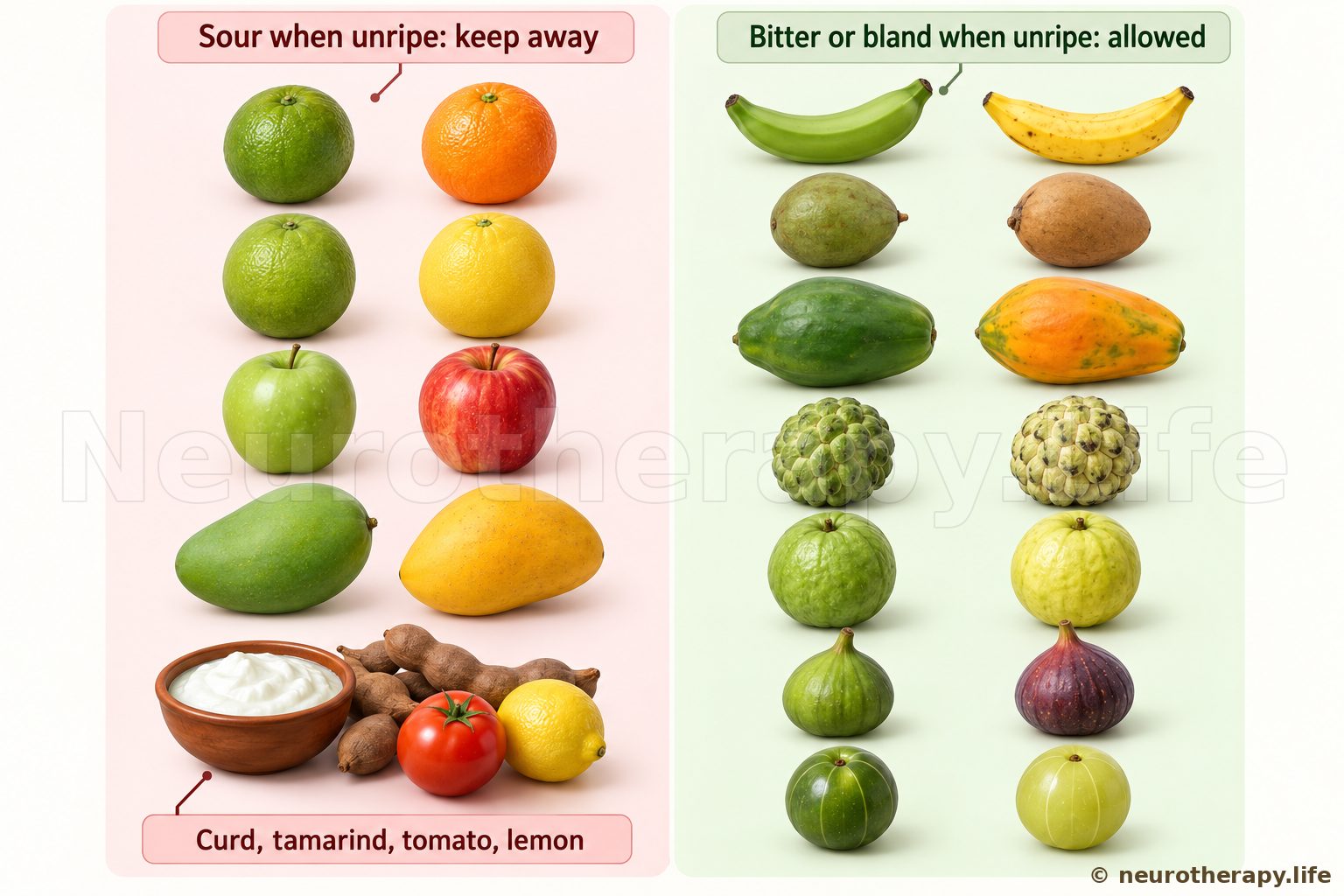
In Neurotherapy (LMNT), pain in the joints is often linked to acid rising in the blood, and Ayurveda also says that sour foods increase pain. So people who have body pain or joint pain are advised not to eat sour things such as curd, tamarind, tomato and lemon.
The fruit rule surprises most people. Fruits that are sour when unripe and sweet when ripe, such as orange, sweet lime, apple and mango, are also kept away. Fruits that are bitter or bland when unripe, such as banana, chikoo, papaya, custard apple, guava, fig and amla, may be eaten with relish. Learn the test, not the list, and you can sort any fruit yourself.
The setting matters too. Lemon water is given as a treatment during a fast in naturopathy, but lemon taken with food may increase pain. Kokum is said to be excellent for acidity, yet each patient has to check whether it brings on joint pain.
So the rule is tested on each person. Remove one food completely for about two weeks and note how the pain feels. If nothing changes, give that food back. If the pain eases, keep it out and test the next food. One at a time, or nobody will know which change helped.
Key points
- The sour rule is for people with body or joint pain, not for everyone.
- Fruits are sorted by their taste before ripening.
- The same food can help in one setting and harm in another.
- Test one food at a time, and give back what did not need removing.
Go deeper
Food as Medicine: Eating and Drinking Rules
Food as medicine, and the rest of the eating rules
Arthritis and joint pain (osteoarthritis)
Arthritis and joint pain, where the sour rule is most used
Rheumatoid arthritis (RA) and rheumatism
Rheumatoid arthritis, the morning-stiff joint
Acidosis
Acidosis, the acid direction behind much joint pain
Acidity (heartburn and acid reflux)
Acidity, where kokum is said to help
The Two Kingdoms: Acidic and Alkaline Bodies
The two kingdoms: acid and alkali in the body
Anaemia
Anaemia, and why sour foods are not removed carelessly
Read the full guide
This topic is part of: Food as Medicine: Eating and Drinking Rules
Safety: when it is held back
- Curd is a key source of protein and calcium, and tomato, lemon and tamarind help the body absorb iron. Do not remove all of them at once from someone who is anaemic, elderly, underweight, pregnant or a growing girl. Anaemia
- Weight falling without trying, or anaemia in an adult man or a woman past menopause, is a question for a doctor, not a diet change.
Guruji says
“The patient has to try it for himself and see. Every single thing will not have the same effect on every person.”
This page explains what a Neurotherapy (LMNT) treatment is for; it is not a self-treatment guide and does not diagnose. Neurotherapy (LMNT) works alongside your medical care — keep taking the medicines your doctor prescribed.