Piles, fissure, fistula and prolapse: one family with one root
Neurotherapy (LMNT) sees piles, anal fissure, fistula and rectal prolapse as one family of acid-side complaints, mostly driven by hard constipation and loose, slack muscles. Treat the constipation behind them, and the water habit behind that.
Overview
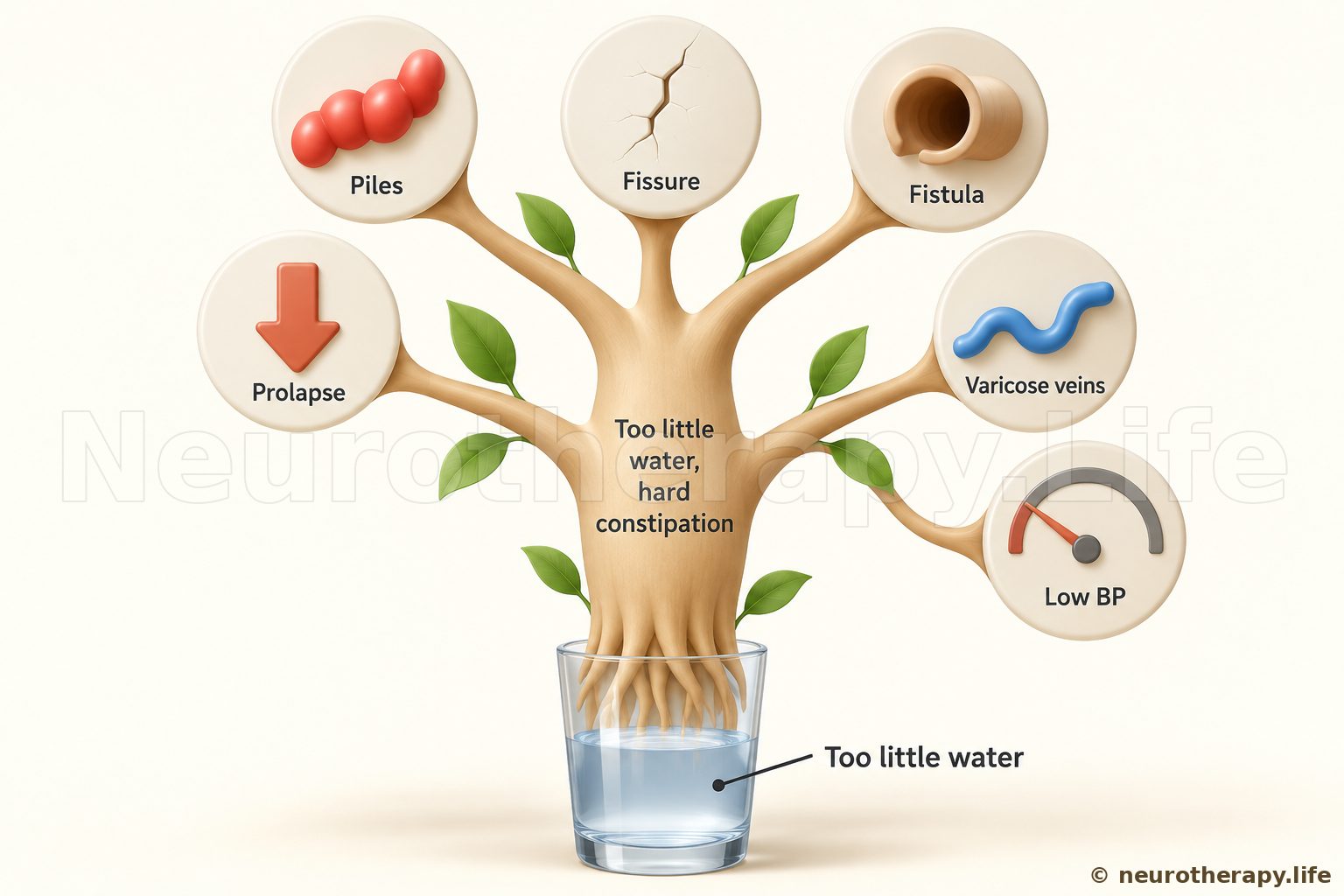
Four words first, made plain. Piles (bavāsīr, haemorrhoids) are swollen blood vessels at the anus. A fissure is a small tear in the skin at the opening, which is why it burns so badly when passing stool. A fistula (bhagandar) is a small abnormal tunnel from the bowel to the skin near the anus, which is why it discharges. Prolapse means an organ, here the rectum, slipping down out of its place.
Neurotherapy (LMNT) treats these four as diseases of acid, with hard constipation as one chief cause. A body short of water keeps its stools dry and hard, and straining pushes on the soft tissues at the anus. Prolapse of the rectum, prolapse of the uterus and hernia share one thing: the flesh and muscles have become loose. Varicose veins and low blood pressure join the same family for the same reason.
So when a patient shows one member of the family, the therapist looks for the constipation behind it, and for the water habit behind that. The named treatment for this family is the Triangle for Piles, given over the triangle-shaped bone at the base of the spine with the patient lying face down. It strengthens the pelvic muscles and tightens the rings of muscle that close the bladder and the anus. The exact method is taught hands-on in the course.
Habits matter as much as hands. Go when the urge comes, sit only a few minutes without the phone, raise the knees with a low stool under the feet on a Western seat, and do not force against a stool that will not come.
Key points
- Piles, fissure, fistula and rectal prolapse are treated as one family of acid-side complaints.
- Hard constipation and loose muscles are the common root.
- Ask about varicose veins, hernia and low blood pressure too; they often travel together.
- Straining builds the very problems it comes from; posture and timing help.
Go deeper
Piles (haemorrhoids) and fissure
Piles: causes, care and warning signs
Rectal prolapse
When the rectum slips out of place
Triangle for Piles
The Triangle for Piles and what it supports
Varicose veins
Varicose veins, another sign of slack muscles
Constipation
Constipation, the usual root of this family
Uterine prolapse
Prolapse of the uterus and loose pelvic muscles
What the Bowel Tells You: Constipation, Stool and Water
What the bowel tells you: the full guide
Read the full guide
This topic is part of: What the Bowel Tells You: Constipation, Stool and Water
Safety: when it is held back
- Rectal bleeding is never blamed on piles until a doctor has looked inside, especially with a lasting change in bowel habit, weight loss, or age past forty. Piles (haemorrhoids) and fissure
- In constipation and this whole family, Gas Only, (10) Medulla and Dys are blocked, because they can make the constipation worse. Gas Only
- The Triangle for Piles is not given to those who pass little urine. Triangle for Piles
This page explains what a Neurotherapy (LMNT) treatment is for; it is not a self-treatment guide and does not diagnose. Neurotherapy (LMNT) works alongside your medical care — keep taking the medicines your doctor prescribed.