Warning signs that stop a Neurotherapy (LMNT) session at once
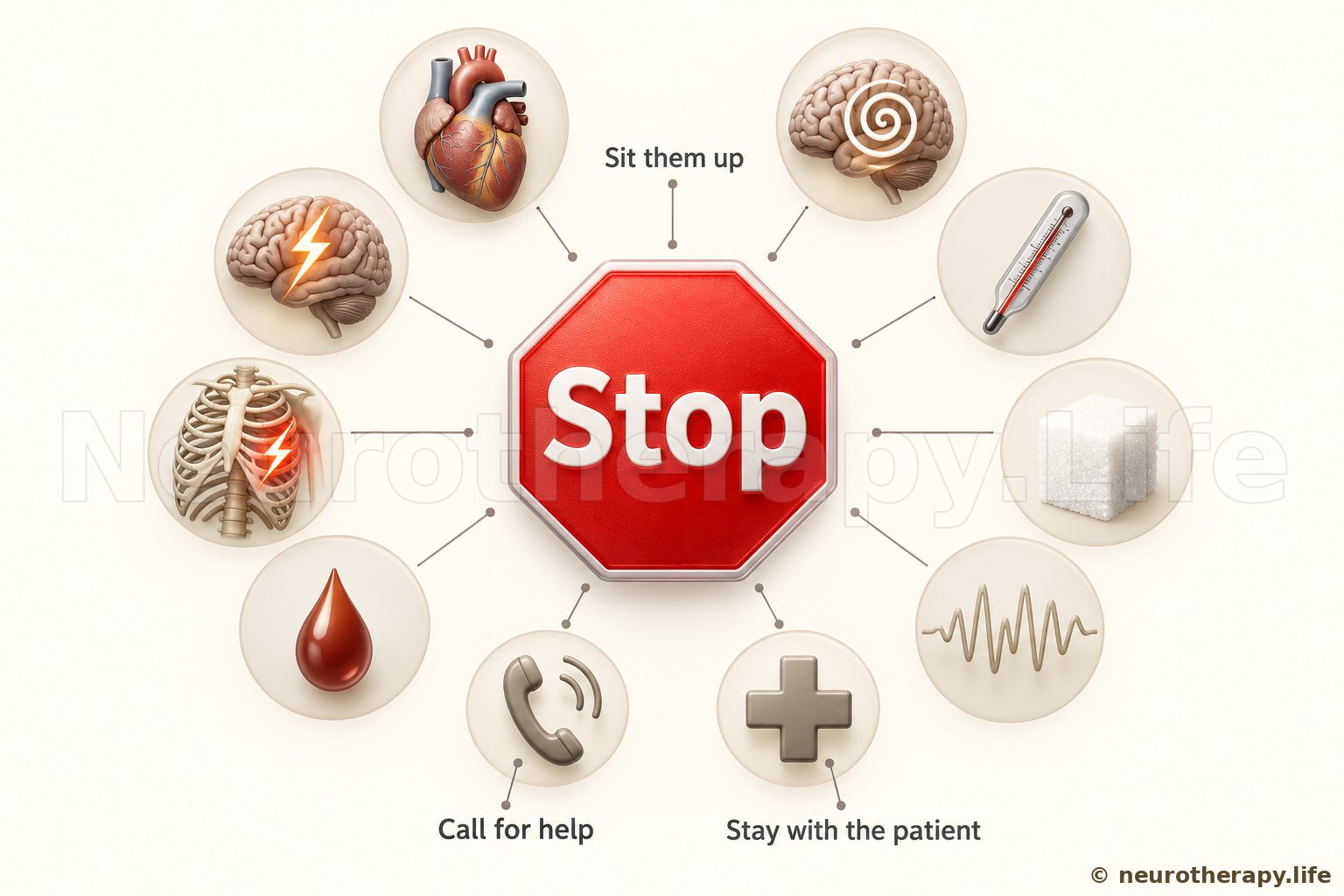
Some findings appear while the therapist is working. When one of them shows, the session stops, the formula is not finished, and the patient is helped to the right care straight away.
Overview
If the patient says it hurts, or their face shows it, the therapist changes the angle or eases the weight without arguing. Only the patient knows the pain. If it does not settle, the treatment stops.
Chest pain or a choking feeling in the chest stops the session. The patient is sat up, not laid flat, and asked about heart disease and any tablet or spray they carry. Pain that has changed, or comes with breathlessness, sweating or sickness, or spreads to the jaw or arm, needs emergency care now.
Sudden dizziness with unsteadiness, double vision, slurred speech, a drooping face or a weak arm means an ambulance, and no pressure on the neck. So does a new headache unlike any before. A high fever with shaking chills, a racing pulse, confusion or no urine for many hours can mean a serious blood infection; that patient is moved, not treated.
Sweating, trembling or confusion in someone on insulin or sugar tablets is treated as low sugar: quick sugar if awake, an ambulance if not. During a fit, protect the head, do not hold the person down, put nothing in the mouth, and turn them on their side afterwards. Heavy bleeding, or collapse with belly pain in a woman who could be pregnant, needs emergency care at once.
Key points
- Pain that does not settle when the angle changes ends the treatment.
- Chest pain, stroke signs, a sudden new headache, signs of a blood infection, low sugar, a fit and heavy bleeding all stop the session.
- Stop, do not finish the formula, note the time, and stay with the patient.
- These signs are never explained away as part of the patient's usual picture.
Go deeper
Angina (chest pain from the heart)
Angina, chest pain from the heart
Paralysis and stroke
Paralysis and stroke, and the signs that need an ambulance
Headache and migraine
Headache and migraine, and the headache that is different
Septicaemia (sepsis)
Septicaemia, a serious infection in the blood
Diabetes
Diabetes, and the risk of low sugar
Epilepsy (fits)
Epilepsy, and what to do during a fit
Low blood pressure
Low blood pressure, and the sudden kind that is an emergency
When the Hand Must Stop: Blocked Points and Safety in Neurotherapy (LMNT)
When the hand must stop: the whole guide
Read the full guide
This topic is part of: When the Hand Must Stop: Blocked Points and Safety in Neurotherapy (LMNT)
Safety: when it is held back
- In an emergency, call 108 or 112 straight away. Neurotherapy (LMNT) never takes the place of emergency care.
- Call for help during a fit that lasts more than five minutes, a second fit without recovery, a first-ever fit, an injury, or a fit in pregnancy. Epilepsy (fits)
- Ask every patient on insulin or sugar tablets when they last ate before a long session. Diabetes
This page explains what a Neurotherapy (LMNT) treatment is for; it is not a self-treatment guide and does not diagnose. Neurotherapy (LMNT) works alongside your medical care — keep taking the medicines your doctor prescribed.